

2026 Best Microbiology Lab Equipment Suppliers?
Choosing the 2026 best microbiology lab equipment suppliers requires more than comparing catalog prices. Laboratories need reliable instruments, validated workflows, responsive service, and clear documentation. A failed incubator can compromise cultures, delay reporting, and waste expensive reagents.
Industry forecasts show continued demand for microbiology testing, driven by clinical diagnostics, food safety, pharmaceuticals, and environmental monitoring. MarketsandMarkets’ Microbiology Testing Market reports identify automation, rapid detection, and molecular integration as important growth areas. Grand View Research also links market expansion with rising laboratory testing volumes and stricter quality expectations. However, published market estimates differ by scope and methodology. That matters.
Practical evidence should guide supplier selection. Look for temperature uniformity data, calibration certificates, software traceability, preventive-maintenance plans, and accessible technical support. Suppliers should also explain installation qualification, operational qualification, and performance qualification procedures. These details become visible beside a real 37°C incubator, a crowded biosafety cabinet, or a plate reader awaiting service.
Safety and competence remain central. The World Health Organization’s Laboratory Biosafety Manual, fourth edition, emphasizes risk assessment, appropriate equipment, and consistent laboratory practices. ISO 15189:2022 similarly supports competence, traceability, and quality management in medical laboratories. These standards do not endorse specific brands, and no supplier is perfect. A strong shortlist should therefore compare total ownership cost, local support, validation resources, warranty terms, and user experience. Reviews help, but they can be incomplete. The most suitable supplier is the one that reliably supports your microbiology lab’s actual workload, space, staffing, and compliance needs.
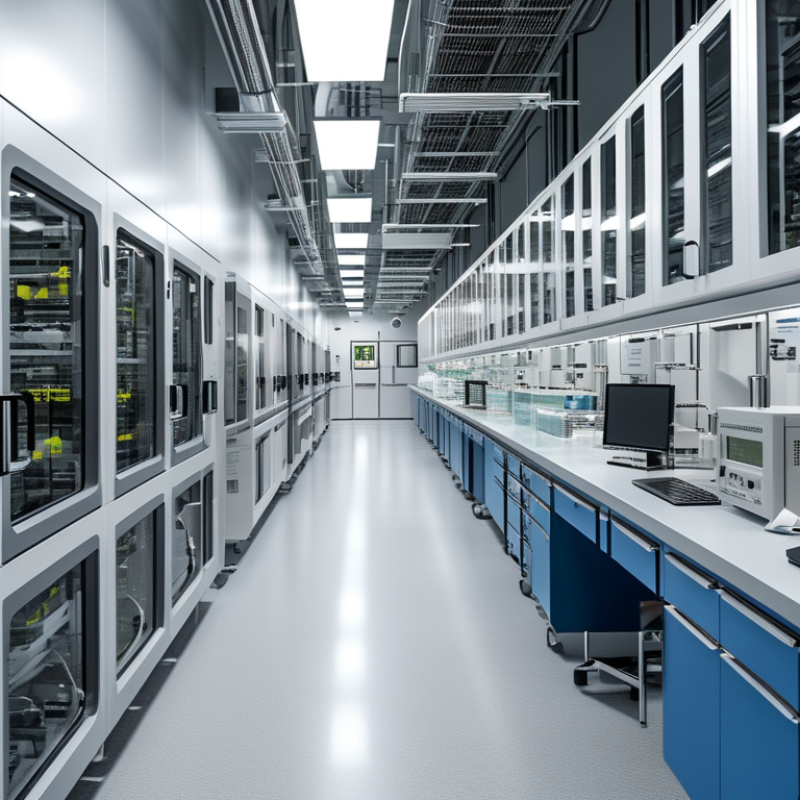
What Microbiology Laboratory Equipment Suppliers Provide in 2026
Microbiology laboratory equipment suppliers in 2026 provide more than incubators and microscopes. They deliver complete workflows, including sample preparation stations, autoclaves, colony counters, biosafety cabinets, and digital monitoring systems. MarketsandMarkets estimates that the global microbiology testing market could reach approximately USD 6.9 billion by 2028, supported by food safety, pharmaceutical, and clinical testing demand.
Reliable suppliers also provide installation qualification, operational qualification, calibration records, and preventive maintenance. These documents support ISO 15189:2022 quality systems and improve audit readiness. Temperature mapping matters. A supplier should show how an incubator maintains 37°C across shelves, not only display a digital reading. Remote alarms, access controls, and traceable service records are increasingly practical features.
Consumables are equally important. Suppliers may provide sterile containers, culture media, filtration units, pipette tips, and validated storage solutions. The WHO Laboratory Biosafety Manual, fourth edition, stresses risk-based controls and proper equipment use. That makes biosafety cabinets, sealed centrifuge rotors, and airflow verification essential choices. Not every automated system fits every laboratory.
I would question impressive specifications without local service coverage. A fast instrument becomes expensive when a replacement sensor takes three weeks. Suppliers should disclose spare-parts availability, training hours, response times, and software limitations. Data integration is improving, but compatibility problems still occur. A careful site assessment remains necessary before purchase.
2026 Best Microbiology Lab Equipment Suppliers? - What Microbiology Laboratory Equipment Suppliers Provide in 2026
| Equipment Category | Typical Equipment Supplied | Common Laboratory Use | Typical Performance or Capacity | Common Configuration Options | Supplier Services Commonly Provided | Key Selection Criteria |
|---|---|---|---|---|---|---|
| Sterilization | Laboratory Autoclaves | Steam sterilization of culture media, glassware, instruments, and biohazard waste | Typical chamber capacities range from approximately 20 to 150 liters; operating temperatures commonly include 121°C and 134°C cycles | Benchtop or floor-standing models; pre-vacuum cycles; liquid cycles; drying functions; data recording | Installation, validation support, preventive maintenance, chamber inspection, and operator training | Load type, cycle control, safety interlocks, temperature uniformity, documentation, and local service availability |
| Sample Preparation | Laboratory Homogenizers and Stomachers | Preparation of food, environmental, pharmaceutical, and clinical samples before microbial testing | Common sample volumes range from tens of milliliters to several hundred milliliters, depending on the bag and instrument format | Adjustable speed and time; paddle or rotor systems; disposable sterile bags; closed processing chambers | Application consultation, accessory supply, cleaning guidance, and workflow integration | Sample matrix, processing consistency, contamination control, noise level, throughput, and disposable compatibility |
| Incubation | Microbiological Incubators | Growth and recovery of bacteria, yeast, fungi, and other microorganisms under controlled conditions | Many general-purpose units operate near ambient temperature through approximately 60°C; stability and uniformity are critical | Forced-air or gravity convection; digital control; programmable alarms; access ports; glass or solid doors | Temperature mapping, calibration, qualification documentation, maintenance, and replacement parts | Temperature range, uniformity, recovery time, chamber volume, shelving, humidity requirements, and alarm functions |
| Specialized Incubation | Shaking Incubators | Suspension culture, microbial fermentation studies, and aeration-sensitive growth experiments | Typical shaking speeds cover low-speed orbital motion through several hundred revolutions per minute, depending on platform size | Orbital platforms; interchangeable clamps; refrigeration; programmable temperature and speed; CO₂ options | Platform configuration, application testing, calibration, and technical support | Orbit diameter, maximum load, speed accuracy, temperature control, vessel compatibility, and vibration performance |
| Containment | Biological Safety Cabinets | Protection of personnel, samples, and the laboratory environment during work with potentially hazardous biological materials | Class II cabinets are widely used for routine microbiological work; airflow and filter performance require documented verification | Different working widths; motorized sash; ultraviolet lamp options; built-in electrical outlets; stand or bench installation | Site assessment, installation, airflow certification, filter service, decontamination coordination, and annual testing | Required protection level, cabinet class, airflow pattern, noise, ergonomic design, certification capability, and room suitability |
| Aseptic Handling | Clean Benches and Laminar Flow Workstations | Protection of sterile materials and products during non-hazardous aseptic procedures | Horizontal or vertical unidirectional airflow designs are available; performance depends on airflow velocity and filter condition | Vertical or horizontal airflow; stainless-steel work surfaces; adjustable lighting; prefilters; optional UV systems | Airflow testing, filter replacement, installation, cleaning instructions, and user training | Whether personnel protection is required, work direction, cleanliness target, noise, workspace size, and certification requirements |
| Microscopy | Compound and Phase-Contrast Microscopes | Observation of cell morphology, stained specimens, microbial structures, and culture characteristics | Common systems use 4×, 10×, 40×, and 100× objectives; oil immersion is frequently used for high magnification | Brightfield, phase contrast, fluorescence, digital cameras, ergonomic stands, and image-analysis software | Optical configuration, camera installation, preventive maintenance, training, and image workflow support | Contrast method, optical quality, objective set, camera resolution, software compatibility, ergonomics, and serviceability |
| Colony Analysis | Colony Counters and Digital Imaging Systems | Counting and documenting microbial colonies on agar plates and filtration membranes | Suitable systems support manual, semi-automated, or image-assisted counting, depending on colony contrast and sample type | Illuminated counting surfaces; digital imaging; audit trails; adjustable lighting; barcode or sample identification options | Software setup, user training, method development, verification support, and data export configuration | Colony size range, color contrast, counting accuracy, plate formats, traceability, software validation, and ease of cleaning |
| Liquid Handling | Laboratory Pipettes and Pipetting Systems | Transfer and measurement of culture media, reagents, dilutions, and microbial samples | Manual pipettes commonly cover microliter ranges; electronic and automated systems support repeatable serial dilution workflows | Single-channel or multichannel; adjustable-volume; electronic control; sterile filtered tips; liquid-level detection | Calibration, performance verification, repair, ergonomic assessment, and consumable supply | Accuracy, precision, volume range, tip compatibility, contamination prevention, throughput, and calibration records |
| Centrifugation | Laboratory Centrifuges | Pelleting cells, separating suspensions, clarifying lysates, and processing microbiological samples | Benchtop models may support low-speed routine work through high-speed applications; rotor capacity varies significantly | Fixed-angle or swinging-bucket rotors; refrigeration; sealed safety rotors; programmable speed and time | Rotor selection, balancing guidance, maintenance, safety inspection, and calibration services | Required relative centrifugal force, tube format, temperature control, capacity, imbalance protection, and containment needs |
| Culture Media | Media Preparation and Dispensing Equipment | Mixing, dissolving, sterilizing, holding, and dispensing microbiological culture media | Systems range from small benchtop mixers and dispensers to larger automated preparation units for high-throughput laboratories | Heating and stirring; pH monitoring; programmable dispensing; temperature holding; batch records | Process configuration, recipe setup, validation support, maintenance, and operator training | Batch size, media viscosity, temperature accuracy, dispensing precision, cleanability, documentation, and throughput |
| Anaerobic Culture | Anaerobic Chambers and Gas-Generating Systems | Cultivation and handling of microorganisms that require reduced-oxygen or oxygen-free conditions | Configurations range from sealed jars for small workloads to glovebox-style chambers for continuous anaerobic handling | Gas mixing and monitoring; glove ports; catalyst systems; transfer locks; humidity control; oxygen alarms | Installation, leak testing, gas setup, sensor calibration, maintenance, and application training | Required oxygen level, workload, chamber access, recovery time, gas consumption, monitoring, and contamination control |
| Molecular Testing | Thermal Cyclers and Real-Time PCR Systems | Amplification and detection of microbial nucleic acids for research, screening, and quality-control workflows | Thermal cyclers commonly support multi-well formats; real-time systems measure fluorescence during amplification cycles | Gradient temperature control; interchangeable blocks; melt-curve analysis; multiplex fluorescence; software-based reporting | Installation, calibration, assay setup support, software training, and performance verification | Sample throughput, temperature uniformity, detection channels, software traceability, assay compatibility, and service support |
| Water and Environmental Testing | Membrane Filtration and Microbial Analysis Units | Concentration and enumeration of microorganisms in water, beverages, and other liquid samples | Systems are commonly configured for standard membrane diameters and vacuum-assisted filtration workflows | Single- or multi-place manifolds; stainless-steel or disposable components; vacuum regulation; sterile filtration accessories | Method consultation, manifold configuration, cleaning validation support, and replacement-part supply | Sample volume, filter compatibility, sterility, throughput, cleaning method, vacuum control, and regulatory documentation |
| Storage | Laboratory Refrigerators and Freezers | Storage of culture media, reagents, specimens, reference materials, and microbial stocks | Typical laboratory refrigeration is near 2–8°C; freezer requirements vary from approximately −20°C to ultra-low temperatures | Temperature alarms; remote monitoring; lockable doors; adjustable shelving; backup power connection; inventory systems | Temperature mapping, alarm setup, calibration, preventive maintenance, and emergency service planning | Required storage temperature, capacity, recovery time, alarm reliability, sample access, energy use, and monitoring records |
| Monitoring and Compliance | Data Loggers and Environmental Monitoring Systems | Continuous recording of temperature, humidity, pressure, airflow, and equipment conditions | Recording intervals may be configured from seconds to hours; systems can provide local alarms or network notifications | Wireless or wired sensors; cloud or local software; audit trails; calibration certificates; automated reports | Sensor placement, system configuration, calibration, software training, and documentation support | Measurement range, accuracy, data retention, alarm response, cybersecurity, calibration interval, and auditability |
Reference note: Performance figures and configurations shown are representative industry ranges rather than specifications for any particular supplier or brand. Actual availability, compliance documentation, and service coverage should be confirmed during procurement.
Related Posts
-
2026 Best Microbiology Lab Equipment for Scientists and Researchers?
-

Top Microbiology Lab Equipment for China Best Quality?
-
How to Choose the Best Microbiology Equipment for Your Laboratory in 2026?
-

Top Lab Apparatus Essential Tools for Every Scientist?
-
Top Scientific Equipment Innovations Transforming Research Today?
-

Top Science Lab Supplies to Buy in China Now?