
NEWS AND UPDATES
The latest updates regarding our products and our company

2026 Top Scientific Lab Equipment Innovations for Research and Development?
In the fast-evolving world of scientific research, innovations in scientific lab equipment play a crucial role. As we approach 2026, new technologies are reshaping how experiments are conducted. Researchers are increasingly relying on advanced tools for accuracy and efficiency.
This overview explores groundbreaking innovations poised to enhance research and development. Key advancements include automation, artificial intelligence integration, and miniaturization of equipment. These improvements promise to streamline workflows and boost productivity. However, not all innovations may meet initial expectations.
The complexity of new systems can create barriers for some labs. Moreover, the price of cutting-edge scientific lab equipment can limit accessibility for smaller institutions. As we look ahead, it's important to reflect on how these innovations can drive science forward while also considering their practical implications.
Emerging Technologies in Scientific Lab Equipment for 2026
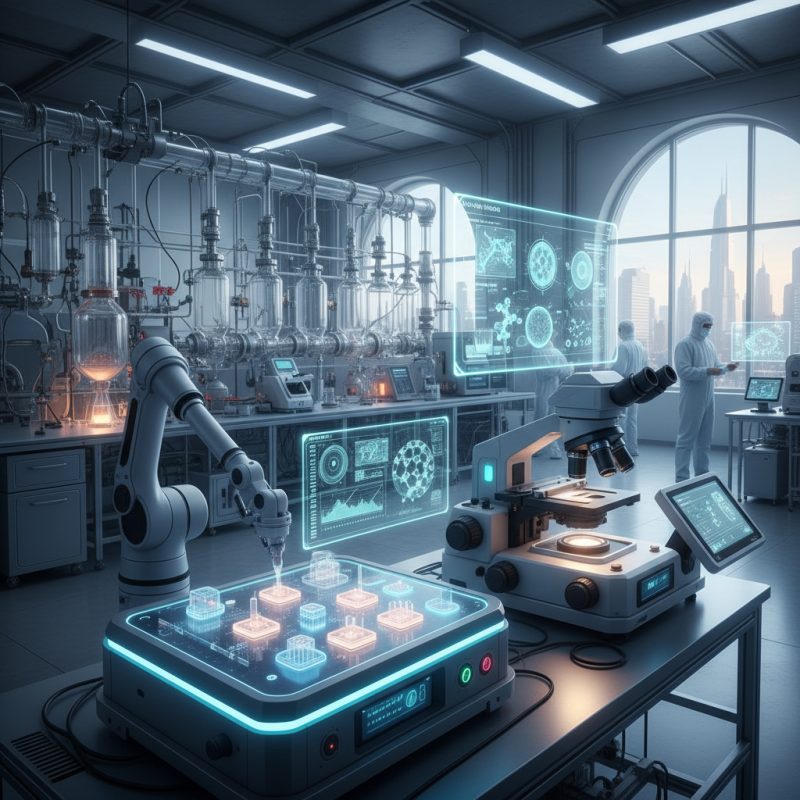
Emerging technologies in scientific lab equipment are reshaping the landscape of research and development. According to a recent industry report, the global market for lab equipment is projected to reach $50 billion by 2026. Innovations such as automated sample analysis and AI-driven data processing are becoming more common. These advancements improve efficiency and accuracy, yet they also raise questions about the reliability of automated systems.
Digital lab notebooks are gaining traction, allowing researchers to record data in real-time. Studies show that labs using digital records save up to 30% time in data management tasks. However, transitioning to digital solutions can be challenging for some teams. Barriers like technical skills and software compatibility may hinder widespread adoption. Many researchers still rely on traditional methods, which can slow down the potential for innovation.
Advanced imaging technologies are also on the rise. Techniques like 3D imaging provide deeper insights into complex biological structures. Yet, the high costs of these technologies can limit access for smaller labs. Balancing cutting-edge research with budget constraints will be a significant challenge in the coming years. As the field evolves, questions around cost-effectiveness and accessibility will need careful examination.
2026 Top Scientific Lab Equipment Innovations for Research and Development
| Innovation | Description | Applications | Key Features |
|---|---|---|---|
| Smart Spectrophotometer | Advanced device that integrates AI for enhanced accuracy. | Biochemistry, Environmental Science | Real-time data analysis, user-friendly interface |
| Automated Pipetting System | A robotic system that increases precision in liquid handling. | Genomics, High-Throughput Screening | Multi-channel operation, adaptable protocols |
| Portable PCR Device | Compact device for on-site DNA amplification. | Field Research, Diagnostics | Rapid results, battery-operated |
| Next-Gen Incubator | Features smart technology for optimal cell growth conditions. | Cell Culture, Biologics Production | Environmental monitoring, programmable settings |
| Advanced Microscopy Systems | Incorporates AI for image analysis and enhancement. | Histology, Materials Science | High-resolution imaging, intuitive software |
Advanced Imaging Techniques Revolutionizing Research Methodologies
Advanced imaging techniques are reshaping research methodologies in profound ways. These innovations allow scientists to visualize structures at a microscopic level, enhancing our understanding of biological processes. For instance, researchers can now observe cellular interactions in real time. This capability opens new doors to understanding complex systems and their dynamics.
However, with these advancements come challenges. The data generated can be overwhelming. Researchers may struggle to capture and analyze vast amounts of information. Additionally, the interpretation of imaging results is not always straightforward. Misinterpretations can lead to incorrect conclusions. This underscores the importance of developing better analytical tools and training.
Moreover, accessibility remains a concern. Not all laboratories have the resources to acquire cutting-edge imaging equipment. This disparity can hinder progress in research, limiting the potential of smaller institutions. While advanced imaging techniques provide incredible insights, it is crucial to ensure that all researchers can utilize these tools effectively.
Smart Automation in Labs: Enhancing Efficiency and Precision
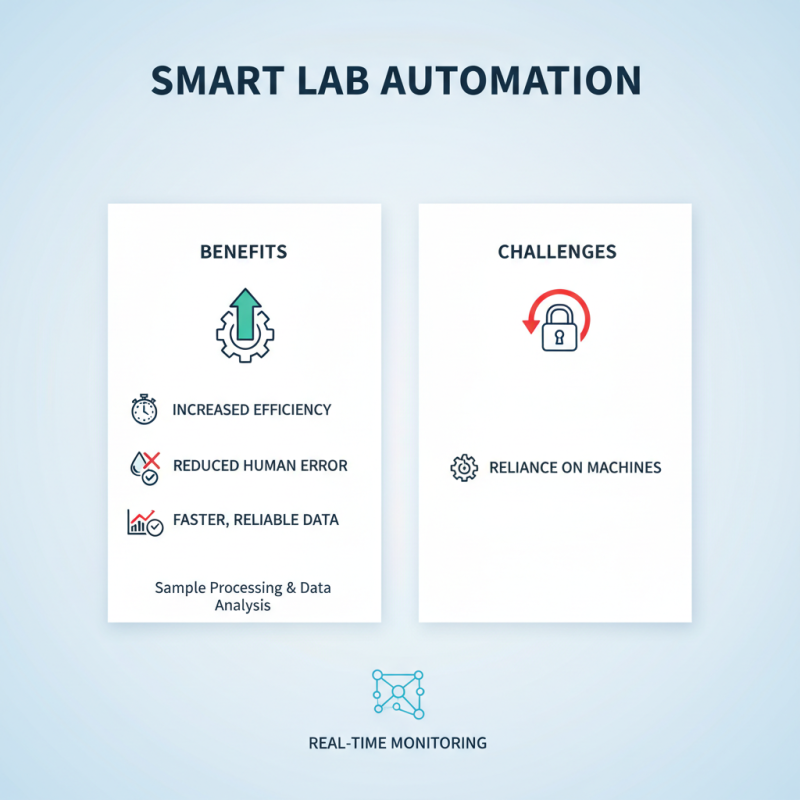
Smart automation is transforming laboratories, making research more efficient. Automated systems streamline sample processing and data analysis. They reduce human error and enhance accuracy. With real-time monitoring, labs can adjust experiments on the fly. This innovation means quicker results and more reliable data. Yet, reliance on machines can also pose challenges.
As labs integrate smart technology, they may encounter unexpected issues. For instance, automation often requires new skills. Researchers must adapt to operating sophisticated equipment. There might be a learning curve, leading to temporary inefficiencies. Additionally, while automation speeds up processes, it can overlook nuanced results. A machine might miss subtle variations that a human eye would catch.
Safety is another critical factor. Automated systems must be regularly checked and maintained. Neglecting this can lead to overconfidence in results. Balancing automation with human oversight is crucial. Labs should strive for harmony between technology and expertise. Finding this balance will shape the future of research.
Sustainable Lab Innovations: Eco-Friendly Equipment for Research
As researchers increasingly prioritize sustainability, eco-friendly lab equipment holds significant promise. Innovative designs are emerging that reduce waste and energy use. For instance, solar-powered devices can drastically cut electricity consumption. Some labs are adopting biodegradable materials for common supplies to minimize plastic pollution.
Tips: Consider assessing your lab's waste output. Small changes can yield big results. Look for reusable lab items whenever possible.
Additionally, energy-efficient instruments are increasingly available. These allow laboratories to maintain high performance while reducing their carbon footprint. Many researchers are exploring water-saving technologies as well. Innovations like closed-loop systems provide essential cooling without excessive water usage.
Tips: Evaluate the lifecycle of your lab equipment. Choose suppliers who prioritize sustainability. This not only helps the environment but also influences funding opportunities.
Integrating Artificial Intelligence in Laboratory Tools and Solutions
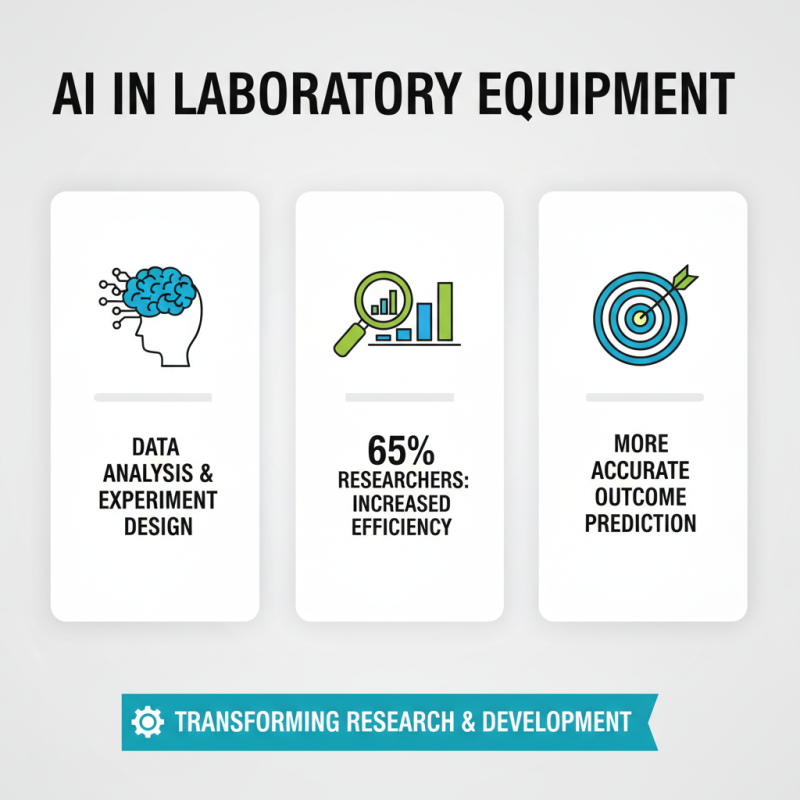
The integration of artificial intelligence (AI) in laboratory equipment is transforming research and development. AI-driven solutions enhance data analysis and experiment design. A recent report highlighted that 65% of researchers believe AI tools increase efficiency in their workflows. This is evident as AI algorithms can predict outcomes more accurately than traditional methods.
However, challenges remain. Researchers may feel overwhelmed by AI's complexity. Many lack proper training to fully utilize these advanced tools. A survey indicated that nearly 40% of labs are hesitant to implement AI due to the steep learning curve. This gap underscores the need for improved educational resources focused on AI in lab settings.
As labs adopt these technological advancements, they have to consider ethical implications. AI systems must be transparent and interpretable to ensure credibility. Data privacy is a significant concern, especially in sensitive research fields. Inadequate guidelines might lead to misuse. Thus, continuous evaluation of AI integration in labs is essential.
Related Posts
-
Top Lab Apparatus Essential Tools for Every Scientist?
-

2026 Best Lab Apparatus for Innovative Experiments and Research?
-
What is a Microbiology Lab and What Do They Do?
-
2026 Top Microbiology Lab Equipment You Need to Know?
-
Top Microbiology Equipment for Effective Laboratory Research and Analysis?
-

What is the Importance of Lab Supplies in Scientific Research?
Schedule
Monday to Thursday:
8:15 – 17:00
Friday:
8:00-15:00
Address
Leonardo Da Vinci, 10
Valencia Technology Park
46980 Paterna, Valencia, SPAIN
Real Laboratory SL
info@site_e1c8a3bd-d539-4d7f-8695-37f21373de39
Teléfono: +34 96 136 61 07