
• NEWS AND UPDATES

    The latest updates regarding our products and our company

2026 Top Scientific Lab Equipment Innovations to Watch?

As we move toward 2026, the landscape of scientific lab equipment is shifting rapidly. Innovations are emerging that promise to enhance research efficiency and accuracy. Laboratories are increasingly adopting advanced technologies that make experiments more reliable. These innovations could redefine how scientists conduct their work.

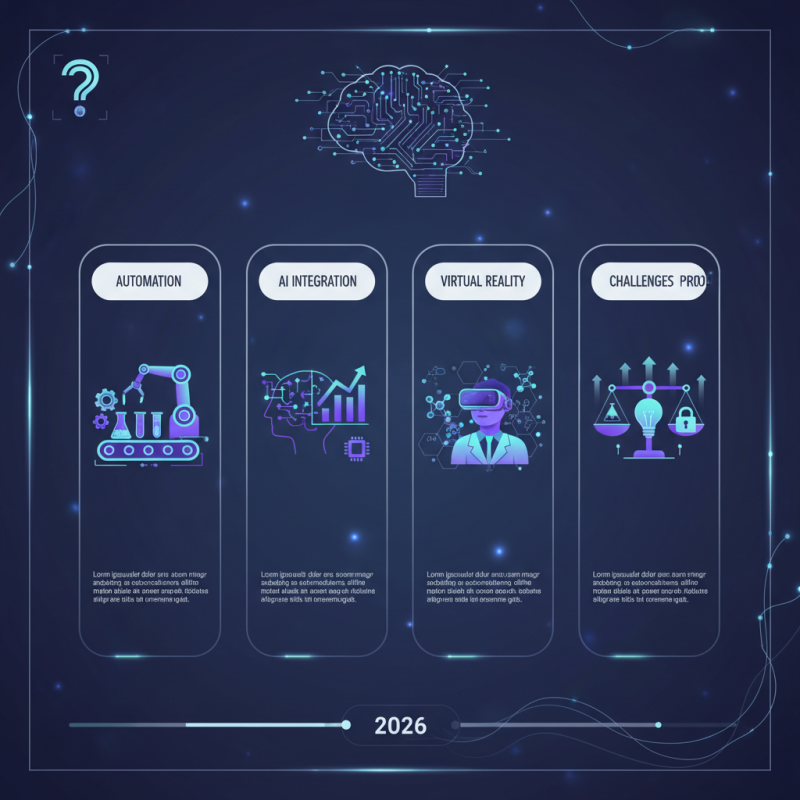
One area of focus is automation. Automated systems are now prevalent in many labs. They reduce human error and increase throughput. Another trend involves the integration of AI in scientific lab equipment. AI systems can analyze data faster and more efficiently than humans. This leads to better decision-making, but it raises questions about reliance on machines.

Virtual reality is also making its mark. It allows researchers to simulate complex experiments. However, the effectiveness of such tools can vary. Some scientists may find them hard to adapt to. These advancements show promise, yet challenges remain. The future of scientific lab equipment is bright, but it requires thoughtful consideration of both benefits and drawbacks.
2026 Top Scientific Lab Equipment Innovations to Watch?

Emerging Trends in Scientific Lab Equipment for 2026

As we approach 2026, the landscape of scientific lab equipment is set for significant transformations. Emerging trends indicate a shift towards automation and AI-driven technologies. A recent industry report projects that the market for lab automation will grow by over 25% in the next three years. Researchers are increasingly relying on automation to enhance precision and efficiency in experiments.

Another noteworthy trend is the rise of sustainable lab equipment. A survey revealed that around 70% of lab managers prioritize environmentally friendly products. This trend reflects a heightened awareness of sustainability within the scientific community. Yet, challenges remain. Many labs struggle to balance cost-effectiveness with sustainability.

Moreover, the integration of Internet of Things (IoT) devices is gaining traction. Approximately 40% of labs are expected to adopt IoT solutions by 2026. These devices provide real-time data tracking and equipment monitoring, promoting better decision-making. However, not all labs can embrace such technology due to budget constraints. This disparity raises questions about equal access to innovation in the lab environment.
2026 Top Scientific Lab Equipment Innovations to Watch

This chart showcases the anticipated growth of various categories of scientific lab equipment innovations for 2026. The data reflects emerging trends and the estimated market interest for key innovations.

Key Innovations Enhancing Lab Efficiency and Productivity

In 2026, laboratory efficiency and productivity will see significant boosts from innovative technologies. One standout development is the rise of smart lab systems. These systems utilize AI to manage resources and streamline workflows. By automating routine tasks, researchers can focus on critical experiments. However, integrating these systems requires careful planning. Training and adaptation may pose challenges for some labs.

Moreover, advanced data analytics tools will transform how scientists interact with lab results. These tools can identify patterns that were previously overlooked. They allow quicker decision-making and enhance collaboration among teams. Yet, labs may struggle with data security. Ensuring that sensitive information remains protected is crucial as data-sharing increases.

In addition, next-generation incubators are being designed for precise environmental control. These devices support various biological processes with impressive accuracy. Nevertheless, they can be costly and require technical expertise for optimal use. Balancing innovation with budgetary constraints remains a pressing concern for many laboratories. The future of lab equipment promises much, but careful consideration is vital.

Revolutionary Technologies Impacting Research Methodologies

The landscape of scientific research is rapidly evolving due to groundbreaking innovations in lab equipment. Emerging technologies are reshaping research methodologies across various fields. According to recent reports, around 70% of researchers believe that advancements in analytical tools will enhance data accuracy and efficiency in studies. Smart equipment is not just a trend; it's a necessity.

Many labs are adopting automated systems to reduce human error. These systems streamline processes and allow for more consistent results. Automation can cut down manual labor by up to 40%. However, a challenge arises: as machines take over repetitive tasks, the need for skilled personnel to interpret data grows. This shift requires universities and institutions to rethink training programs.

Tip: Invest in training for staff to ensure they can maximize the use of new equipment. Understanding data interpretation is crucial in this automated age.

Moreover, the integration of AI into lab processes is promising. AI algorithms can analyze vast data sets swiftly. Yet, reliance on AI poses risks if researchers do not validate machine-generated results. Critical thinking remains essential.

Tip: Always review AI findings against your data sets. Don’t let technology overshadow your scientific intuition.

Incorporating these innovations requires reflection on both benefits and limitations. Balancing technology with human insight is key to advancing research methodologies effectively.

Sustainable Lab Equipment: Greener Solutions for the Future

As sustainability becomes a focal point in scientific research, innovations in lab equipment take center stage. Greener solutions help reduce environmental impacts and promote efficient resource management. Researchers are now looking for equipment that utilizes energy-saving technologies, minimizing waste and optimizing workflows. This trend fosters a culture of responsibility within labs.

For instance, eco-friendly materials in construction reduce carbon footprints. Many labs are adopting biodegradable consumables. These choices reflect a growing awareness of sustainability and its importance in lab practices. There is, however, room for improvement. Some labs still rely on outdated equipment, creating a mismatch between intentions and actions. Upgrading such devices is often costly, but necessary for true sustainability.

Moreover, the industry must prioritize accessibility. Not all researchers have the same capacity for investing in new technologies. Those with limited budgets face challenges in adopting greener solutions. Collaboration and funding initiatives could help bridge these gaps. Emphasizing sustainability is vital, yet it requires commitment from everyone involved. The path ahead is complex, but the potential for a greener future in labs is promising.

Integrating AI and Automation in Lab Equipment Design and Functionality

2026 Top Scientific Lab Equipment Innovations to Watch?

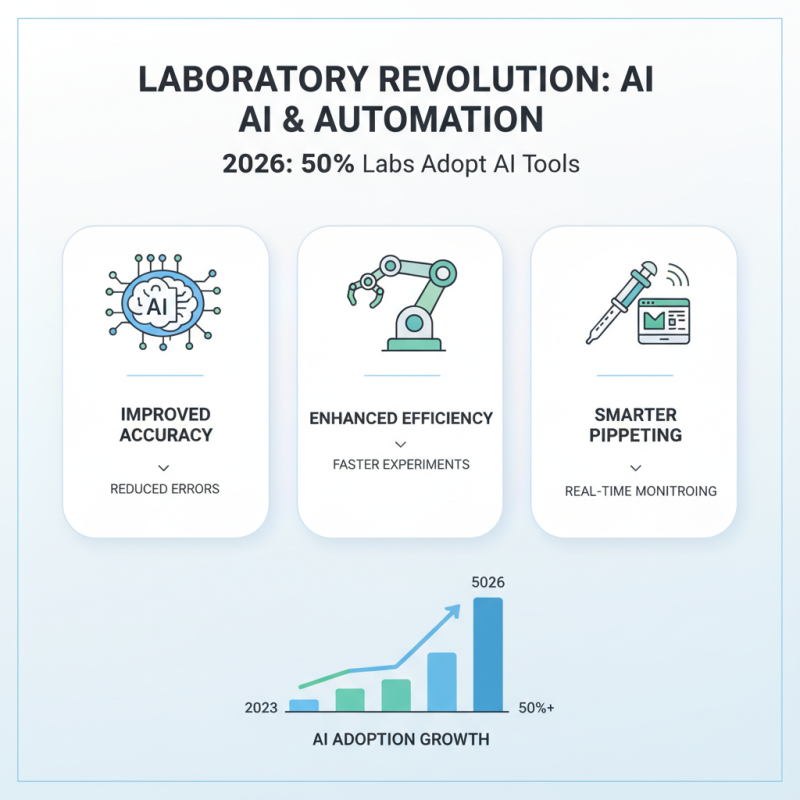
The integration of AI and automation in laboratory equipment is revolutionizing the research landscape. In 2026, a significant shift is expected as data from industry reports indicate that over 50% of laboratories will adopt AI-driven tools. These innovations promise improved accuracy and efficiency in experiments. For instance, automated pipetting systems are becoming smarter, allowing for real-time monitoring and adjustment during experiments.

However, this progress is not without challenges. Many researchers report difficulties in trusting fully automated systems. A survey highlighted that 40% of lab managers express concerns about the reliability of AI in critical processes. Additionally, while automation speeds up workflows, it may also require significant training. Scientists might feel overwhelmed by the rapid changes in technology. The balance between embracing new tools and maintaining control over experimental integrity will be crucial.

Real-time data analysis is another exciting development. Equipment can now process large datasets instantly, which enhances decision-making. Yet, with increased complexity comes the risk of data misinterpretation. Each innovation carries potential pitfalls that must be navigated carefully. The laboratory of the future will need to tread this fine line between embracing automation and ensuring rigorous scientific practices.