

• NEWS AND UPDATES

    The latest updates regarding our products and our company

2026 Top Frosted Glass Front Door Types for Global Buyers

Choosing a Frosted Glass Front Door in 2026 involves more than selecting an attractive entrance. Global buyers must consider privacy, daylight, security, weather exposure, maintenance, and local building requirements. A soft satin panel may suit a quiet apartment, while textured or patterned glass can create stronger visual character for a detached home. The frame matters too. Aluminum offers a clean contemporary profile, timber adds warmth, and reinforced composite systems can support demanding climates.

This guide examines leading frosted glass front door types for different markets and property styles. It considers acid-etched, sandblasted, laminated, textured, and digitally patterned glass. Each option changes how light moves through an entryway. For example, rain may highlight a rippled surface, while fingerprints can appear quickly on smooth finishes. That detail is easy to overlook.

Our comparisons focus on practical buying questions. How much privacy is needed at night? Can the door resist strong sunlight, coastal air, or winter moisture? Is replacement glass readily available? Door performance also depends on installation quality, seals, hinges, locks, and frame alignment. A beautiful panel cannot correct a poorly fitted door.

Some recommendations remain open to debate. A darker frost level may improve privacy, yet it can reduce welcome daylight. Decorative patterns may look distinctive, but future buyers may prefer simpler designs. Buyers should verify regional safety standards and professional installation requirements before ordering. The right choice balances appearance with daily use, long-term reliability, and realistic maintenance expectations. Not every popular design suits every climate.
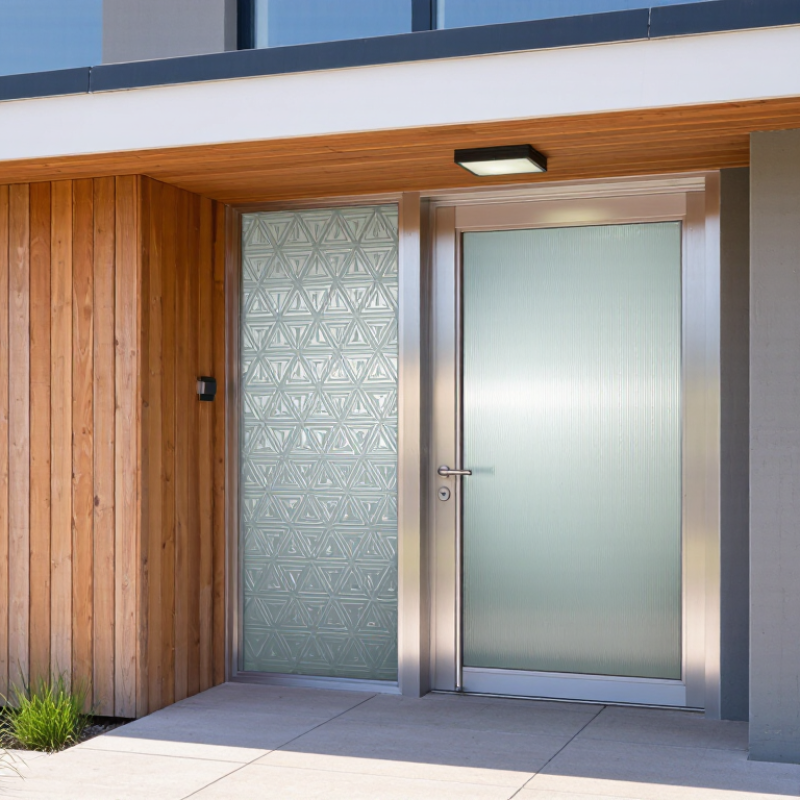
2026 Top Frosted Glass Front Door Types for Global Buyers

Frosted Glass Front Door Types and Their Defining Features

Acid-etched frosted glass is a leading front-door choice for buyers seeking permanent privacy. Its smooth, matte surface scatters daylight without revealing clear silhouettes. It also resists peeling because the finish is created within the glass surface. However, fingerprints may appear near the handle. That small detail matters in busy entrances.

Laminated frosted glass combines a translucent interlayer with two glass sheets. The interlayer helps hold fragments together after impact and can reduce outdoor noise. Tempered frosted glass offers stronger thermal-shock resistance and suits entrances exposed to rapid temperature changes. For energy performance, buyers should check the complete door system, not glass alone. The U.S. Department of Energy reports that heat gain and loss through windows represents about 25%–30% of residential heating and cooling energy use. Front-door glass still needs careful specification.

Patterned or satin-textured glass creates privacy through raised designs, lines, or organic textures. It hides direct views while producing changing shadows across the hallway. Decorative films are usually more economical and easier to replace, but their edges can lift in humid climates. The National Fenestration Rating Council recommends reviewing U-factor and solar heat gain data for fenestration products. A practical mistake is choosing the darkest glass first. A north-facing entrance may need more visible light, while a sunny west-facing door may benefit from stronger solar control.

Glass Opacity Levels, Patterns, and Privacy Options

Frosted glass front doors in 2026 offer several privacy levels for global buyers. Opacity is not a simple yes-or-no choice. Lightly frosted glass softens faces and objects while preserving strong daylight. Medium frosting hides clear shapes but still brightens an entryway. Heavy frosting provides the strongest visual barrier.

Test samples in daylight and at night. Indoor lighting changes the result.

Patterns also control privacy, appearance, and cleaning effort. Acid-etched surfaces create a refined, even haze. Sandblasted designs can produce deeper contrast, but fingerprints may show more clearly. Linear textures suit modern homes and obscure side-to-side views. Organic patterns create softer shadows near the doorway. A clear border can improve visibility around the handle.

Small flaws matter. Fine textures may collect dust along their edges, especially in windy locations.

Privacy depends on more than the glass itself. Door orientation, sidelights, porch lighting, and nearby windows all affect visibility. A solid lower panel can protect privacy without making the entrance feel dark. For exposed entrances, combine medium or heavy frosting with textured sidelights.

Tempered or laminated glass improves impact resistance, but it does not make a door indestructible. Ask suppliers for tested opacity samples, glass thickness, edge details, and performance data suited to your climate.

Some buyers choose maximum privacy and later miss the outdoor connection. That compromise deserves careful thought before ordering.

Frame Materials, Opening Styles, and Door Configuration Choices

2026 Top Frosted Glass Front Door Types for Global Buyers

Frosted glass doors balance privacy with daylight, but the frame often determines long-term performance. Aluminum frames resist moisture and remain relatively light, making them practical for humid coastal areas. Thermal-break aluminum improves insulation, although it usually costs more. Steel offers strength and a firm closing feel, yet exposed finishes may require careful maintenance in salty air. Fiberglass resists warping and can imitate wood grain, while solid wood provides warmth but needs more protection from rain and temperature changes.

Opening style affects daily comfort. Inward-swinging doors protect the exterior surface from some weather, but they consume hallway space. Outward-swinging doors preserve indoor room, though wind pressure and local building requirements need attention. Single doors suit compact entrances. Double doors create a wider passage for furniture and busy households. A single door with a frosted sidelite can add brightness without making the entrance feel oversized. Pivot systems look dramatic, but their hardware and floor clearance deserve precise checking.

Tips: Measure the rough opening, wall thickness, and threshold height before ordering. Ask for the glass privacy level, low-emissivity option, drainage design, and tested wind performance. Check hinge placement with furniture plans. Small mistakes become expensive.

I would not choose the darkest frosting automatically. It may improve privacy but reduce useful daylight. Also, “maintenance-free” is rarely completely true; seals, hinges, and surface coatings still need periodic inspection.

Safety, Energy Efficiency, and Weather Resistance for Global Markets

Frosted glass front doors now come in several practical forms: acid-etched panels, laminated safety glass, tempered glass, and insulated double-glazed units. Acid-etched glass offers lasting privacy without a surface film, while laminated glass holds together after impact. Tempered glass is stronger than ordinary annealed glass, but it can still break under severe stress. Safety needs testing, not assumptions.

Energy performance depends on more than the frosted pattern. Low-emissivity coatings, warm-edge spacers, and insulated frames can reduce heat transfer. The International Energy Agency reports that buildings consume about 30% of global final energy. The U.S. Department of Energy also estimates that windows can account for 25–30% of residential heating and cooling energy use. Doors have less glazing area, yet poor seals can create noticeable drafts. Check the label.

Weather resistance matters across climates. Look for independently tested air leakage, water penetration, structural performance, and thermal values under recognized fenestration standards. In coastal areas, laminated glazing and corrosion-resistant hardware deserve closer attention. In cold regions, double glazing may be adequate, while severe climates may justify triple glazing. No door is maintenance-free. Frames can swell, seals can age, and decorative films may peel. A cautious buyer should compare whole-door performance, not glass alone, and verify local installation requirements before ordering.

Selection Criteria for Residential and Commercial Entryways

2026 Top Frosted Glass Front Door Types for Global Buyers
Choosing a frosted glass front door begins with the building’s purpose, not appearance alone. Residential entryways often suit acid-etched or lightly patterned glass, which softens daylight while protecting indoor privacy. Laminated frosted glass offers better impact resistance and holds fragments together if breakage occurs. For cold or hot climates, insulated double glazing can reduce heat transfer around the entrance.

Commercial entryways require stricter practical evaluation. High-traffic doors need durable glass, reliable hinges, and hardware rated for frequent opening. Clearer sections may help visitors identify movement near the entrance. Stronger privacy levels suit clinics, offices, and ground-floor facilities, but excessive frosting can make reception areas feel closed. Check local building, safety, accessibility, and energy requirements before ordering. Requirements differ widely between regions. That detail is easy to miss.

Tips: Test a sample beside the actual doorway during morning and evening light. Compare privacy from both sides. Ask about edge sealing, cleaning methods, replacement times, and moisture resistance. Avoid judging glass only in a showroom. A pattern that looks elegant indoors may appear too dark outside. No option is perfect, and my practical preference may change after reviewing climate, traffic, and maintenance conditions. Recheck the decision before production.