

• NEWS AND UPDATES

    The latest updates regarding our products and our company

China Top 10 Plastic Utensils Suppliers?

China remains a major sourcing hub for disposable and reusable Plastic Utensils, serving restaurants, caterers, retailers, and foodservice distributors worldwide. This guide introduces ten notable Chinese suppliers and explains why each may deserve attention. The list is not an absolute ranking. Supplier performance can change with materials, production schedules, and export markets.

A reliable evaluation requires more than attractive catalog photos. It examines product range, raw material traceability, factory experience, quality controls, and food-contact documentation. Practical details matter. A buyer should review spoon thickness, fork flexibility, edge finishing, packaging dimensions, and sample consistency. Certifications such as ISO systems, BRCGS, or relevant regional compliance records can support credibility, but documents still require careful verification. Ask for current test reports.

Small checks prevent expensive surprises. Confirm minimum order quantities, mold ownership, color matching, printing options, and shipment terms before placing an order. Factory videos are useful, though an independent audit provides stronger evidence. Some suppliers may offer impressive customization but struggle with stable delivery. Others may provide dependable output but limited design support.

This overview draws attention to manufacturers with different strengths, including high-volume production, compostable materials, premium presentation, and private-label services. It also considers communication quality, response speed, and after-sales support. These factors are easy to overlook. Yet they often shape the real sourcing experience more than a low quotation. Readers should compare samples and verify compliance independently before making a commercial decision.
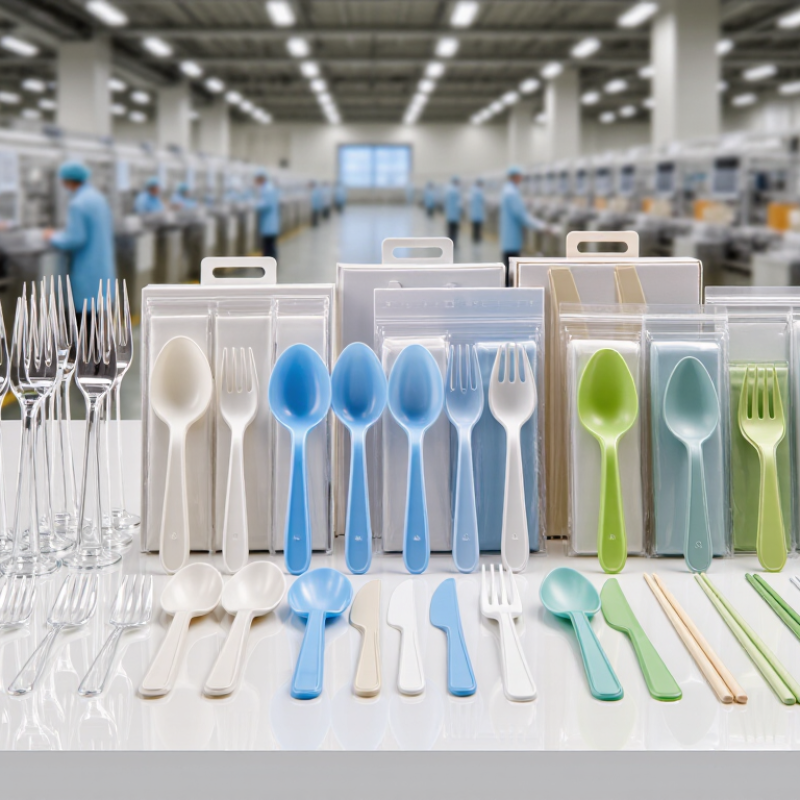
China Top 10 Plastic Utensils Suppliers?

What Are Plastic Utensils and Why Are They Widely Used?

Plastic utensils are tools such as forks, spoons, knives, stirrers, and serving scoops. They are commonly made from polypropylene, polystyrene, or plant-based polymers. Each material handles heat, impact, and moisture differently. Light, clean, and stackable.

Their popularity comes from simple logistics. A restaurant can transport thousands of pieces in compact cartons. Users can serve food quickly without washing equipment. This matters at festivals, hospitals, offices, and takeaway counters. In practical foodservice procurement, buyers also examine edge smoothness, grip strength, odor, and food-contact test records. A low unit price alone is not enough. Some products bend beside hot soup. Others crack during transport. That detail is easy to miss.

Industry data explains both the scale and the concern. The OECD Global Plastics Outlook reported about 353 million tonnes of plastic waste in 2019, while only 9% was recycled. The United Nations Environment Programme also states that roughly 400 million tonnes of plastic are produced annually, with about half designed for single use.

These figures make material selection and waste planning important for China’s utensil suppliers. Reusable designs may reduce disposal, but they require reliable washing systems and durable testing. Compostable options sound attractive, yet they often need controlled industrial facilities. That assumption deserves scrutiny.

Better purchasing records should include resin type, temperature limits, migration testing, packaging efficiency, and end-of-life conditions. Suppliers that publish verifiable test results offer stronger evidence than suppliers using vague environmental language.

How Should China’s Top Plastic Utensils Suppliers Be Evaluated?

China Top 10 Plastic Utensils Suppliers?

A reliable ranking should begin with evidence, not factory size or online visibility. The OECD Global Plastics Outlook reports that only 9% of global plastic waste was recycled in 2019. Therefore, suppliers should provide material traceability, resin specifications, and documented recycled-content claims. A certificate alone is not enough.

Assess food-contact utensils through current test reports, production samples, and batch records. Check overall migration, colorants, heavy metals, odor, and dimensional stability. Ask whether testing covers the exact material, product, and intended temperature.

A supplier using food-grade resin must still control additives and processing conditions. Small details matter.

Audit the factory’s molding lines, clean storage areas, inspection points, and complaint records. Review quality systems such as ISO 9001, but do not treat certification as proof of consistent output. Measure defect rates, delivery performance, tooling ownership, minimum order quantities, and response time. The World Bank’s What a Waste 2.0 report shows municipal waste could reach 3.4 billion tonnes annually by 2050, increasing pressure for efficient material use. However, sustainability claims remain difficult to compare. A supplier may disclose carbon data without explaining its boundaries. That deserves questions. A low quotation can still be a warning. Use weighted scores, independent laboratory checks, and repeat sampling before naming China’s top suppliers.

What Products Do the Top 10 Chinese Suppliers Offer?

China’s top ten plastic utensils suppliers usually offer more than forks and spoons. Their catalogs often include food containers, takeaway boxes, drinking straws, cup lids, stirrers, serving tongs, trays, and reusable kitchen tools. Common materials include PP, PET, PS, and Tritan-style copolyesters. Buyers should check resin identification, temperature limits, wall thickness, and mold consistency before comparing prices.

The product range reflects strong manufacturing capacity. China’s National Bureau of Statistics reported approximately 74.9 million tonnes of plastic products output in 2023. This scale supports custom colors, private packaging, rapid sampling, and large-volume production. Many leading suppliers also provide injection molding, thermoforming, printing, and assembly services. However, a large catalog does not prove equal expertise. Some suppliers handle cutlery well but lack reliable experience with leak-resistant containers.

Product selection is also shaped by environmental pressure. The OECD’s Global Plastics Outlook reported that global plastic waste reached 353 million tonnes in 2019, with packaging representing a major share of use. Therefore, several Chinese suppliers now offer reusable utensils, recycled-content options, and fiber or paper alternatives alongside conventional plastics. Claims need careful review. “Eco-friendly” can mean different things. Request material certificates, food-contact test reports, migration data, production samples, and batch inspection records. Small details matter. A lid that fits poorly creates waste, even when the product looks inexpensive.

China’s Top 10 Plastic Utensils Suppliers: Product Coverage

The chart compares the number of suppliers, out of 10, commonly offering each major plastic utensil product category. Disposable cutlery and food containers show the broadest product coverage, while measuring utensils are more specialized.

Measurement: number of suppliers offering the category, based on publicly listed product ranges.

How Do China’s Leading Suppliers Compare in Quality and Capacity?

Comparing China’s top 10 plastic utensils suppliers requires more than checking annual output. Quality begins with resin selection, mold accuracy, and production discipline. During supplier visits, inspect injection machines, storage areas, and finished goods. A clean workshop is useful evidence, but it is not proof alone.

Ask for material specifications, food-contact test reports, and batch traceability records. Request samples from different production dates. Check rim smoothness, wall thickness, color consistency, and resistance to cracking. Capacity also needs careful measurement. A factory may quote 20 million pieces monthly, yet available capacity can shrink during peak seasons. Confirm machine numbers, mold ownership, shift schedules, and realistic lead times. Experience matters here. Written promises often look better than production reality.

Tips: Compare suppliers with the same sample standards. Use a small trial order before signing larger contracts. Record inspection results with photographs and measurements. Check how quickly the supplier handles defects and corrective actions. A professional team should explain causes, not simply offer replacements. Still, no supplier is perfect. Even strong factories may show uneven packing or minor color variation. Your evaluation should leave room for improvement, not just impressive figures.

What Should Buyers Check Before Choosing a Chinese Supplier?

China Top 10 Plastic Utensils Suppliers?

Before choosing a Chinese plastic utensils supplier, inspect more than product photos. Request the factory’s legal registration, production address, and recent audit records. A trading office may offer useful sourcing support, but it may not control manufacturing quality. Ask for a clear factory contact. Visit in person when order value justifies the cost. Otherwise, use an independent inspection company.

Material verification deserves careful attention. Confirm whether utensils use food-contact-grade plastic suitable for your target market. Request material declarations, migration test reports, and batch traceability records. Check the resin type, colorants, additives, and recycled content. Test samples under realistic conditions, including heat, bending, and dishwasher cycles. A sample may look perfect. Production can still vary.

Quality controls need measurable details. Ask for dimensional tolerances, defect limits, inspection plans, and corrective-action procedures. Review mold ownership, maintenance schedules, minimum order quantities, lead times, and packaging strength. Obtain a written quotation with tooling, delivery, and replacement terms included. Small omissions become expensive later. Communication also matters. Can the supplier explain a failed test without avoiding responsibility? Can they send dated production photos and inspection results? Even careful buyers can overtrust certificates or polished facilities, so independent verification remains worthwhile. A supplier’s willingness to disclose weaknesses often reveals more than a sales presentation.