NEWS AND UPDATES
The latest updates regarding our products and our company

China Top 10 Medical Syringe Pump Manufacturers?
Medical Syringe Pump technology has become a quiet but essential part of modern clinical care. It delivers small, controlled volumes through a syringe, often in intensive care, anesthesia, neonatal wards, and oncology units. A newborn’s medication may move at only a few milliliters per hour. Accuracy matters.
Industry data supports the sector’s continuing importance. Grand View Research identifies infusion pumps as a growing global medical-device segment, driven by chronic disease treatment, hospital modernization, and home-care demand. MarketsandMarkets also highlights smart pumps, wireless connectivity, and drug-library software as major development directions. These reports usually combine syringe, volumetric, and ambulatory pumps. Their figures are useful, but not perfectly comparable.
China has become a major manufacturing base for medical devices, supported by large-scale electronics production and expanding hospital procurement. However, selecting the China Top 10 Medical Syringe Pump Manufacturers requires more than checking export volume or online visibility. This review considers product accuracy, alarm performance, occlusion detection, battery endurance, software usability, quality certification, service coverage, and documented clinical experience. Relevant benchmarks include IEC 60601 safety standards, ISO 13485 quality systems, and applicable regulatory requirements. A low purchase price can hide training costs, calibration problems, or delayed spare parts. That risk deserves attention.
The ranking is not absolute. Hospital needs differ. A neonatal unit may prioritize ultra-low flow stability, while emergency teams may value ruggedness and rapid setup. Manufacturer claims should therefore be compared with independent testing, registration records, user feedback, and after-sales evidence. Some data remains difficult to verify publicly. That limitation should be acknowledged, not ignored.
What Is a Medical Syringe Pump?
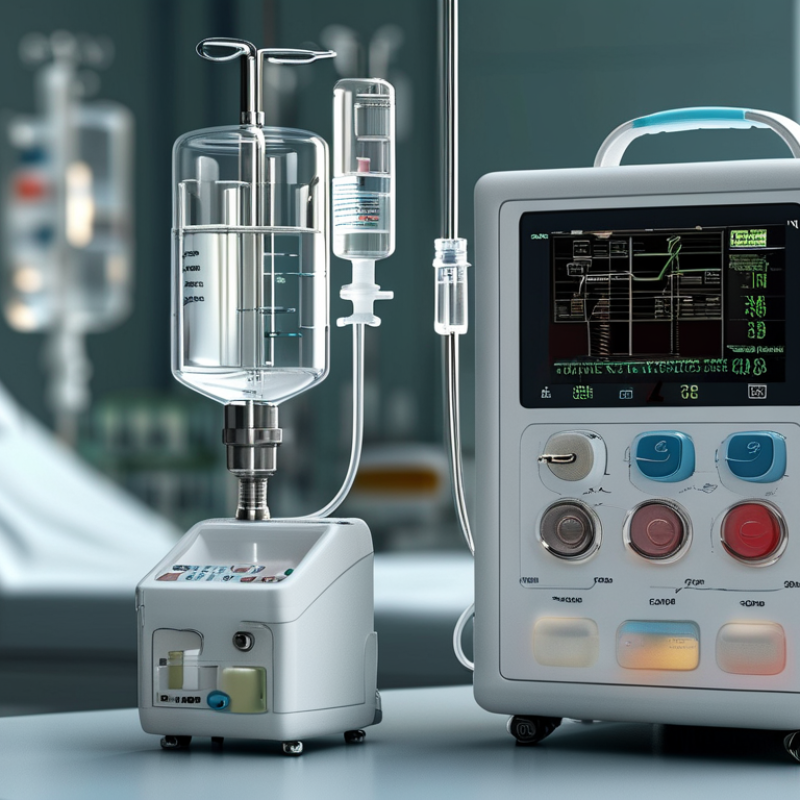
A medical syringe pump is a compact electronic device that delivers medication or fluids through a syringe at a controlled rate. A motor moves the plunger slowly and steadily, supporting accurate administration when ordinary gravity infusion is not precise enough. It is commonly used in intensive care, anesthesia, neonatal care, and laboratory settings.
The operator selects the syringe size, flow rate, and sometimes the target volume. Sensors may detect occlusion, an empty syringe, or an incorrectly fitted barrel. During practical use, the pump may sit beside a patient’s bed, delivering only a few milliliters per hour through a narrow tube. That small flow can matter greatly for patients requiring carefully adjusted medication.
A reliable syringe pump needs more than a bright screen. Its drive mechanism should move smoothly, while alarms must be clear and difficult to overlook. Regular calibration, battery checks, cleaning, and staff training help reduce avoidable errors. Syringe compatibility also deserves attention, because friction differs between syringe types and sizes. The displayed rate is not absolute truth. Tubing resistance, air in the line, and delayed pressure release can affect delivery. Good clinical practice therefore combines the pump’s readings with observation, independent checks, and documented maintenance.
How to Evaluate Chinese Syringe Pump Manufacturers
China Top 10 Medical Syringe Pump Manufacturers?
How to Evaluate Chinese Syringe Pump Manufacturers
Choosing a Chinese syringe pump manufacturer requires more than comparing prices. Grand View Research’s 2024 infusion pump report projects steady global growth through 2030, with demand driven by hospitals, home care, and precise drug delivery. That growth also increases supplier competition. Ask for evidence, not attractive catalog language. Review the manufacturer’s quality system, production records, risk controls, and product traceability. ISO 13485 certification is useful, but a certificate alone proves little. Check its scope, validity, and issuing body.
Evaluate the pump’s accuracy under different flow rates, syringe sizes, temperatures, and battery conditions. Request test reports referencing IEC 60601-2-24, where applicable. Confirm occlusion alarms, anti-bolus performance, alarm volume, and software safeguards. The U.S. FDA has repeatedly identified infusion-pump failures as a patient-safety concern, making verification essential. Also search the NMPA database and request registration details for the exact model. A similar product is not enough. Manufacturing visits can reveal calibration rooms, incoming inspection, clean assembly areas, and uncomfortable gaps in documentation. That discomfort may be informative.
Tips: Request three years of complaint and recall data. Inspect five random units, not one demonstration sample. Test technical support response times across several days. Confirm spare-part availability, training materials, and repair procedures. Do not accept translated reports without original records. A lower quotation may hide validation costs. Even experienced buyers can miss software-update risks, so independent clinical or engineering review remains worthwhile.
China’s Top 10 Medical Syringe Pump Manufacturers
China’s medical syringe pump sector is expanding with hospital automation and home-care demand. Fortune Business Insights valued the global syringe pump market at about USD 1.83 billion in 2023. Its report projects growth to approximately USD 3.22 billion by 2032. These figures create useful context for evaluating China’s leading ten manufacturers, although regional market shares remain difficult to verify.
Reliable suppliers usually demonstrate NMPA registration, ISO 13485 quality systems, and traceable production records. Their pumps should deliver stable flow rates, clear alarms, anti-bolus protection, and secure syringe recognition. In a clinical ward, a readable screen matters. So does a quiet motor. Independent testing should confirm occlusion accuracy, battery endurance, and performance during low-flow infusion. Procurement teams should also inspect calibration procedures and service response times.
Public rankings are imperfect. Many Chinese manufacturers publish product specifications, but fewer disclose audited sales data or failure rates. This limits a completely objective top-ten list. Buyers should compare evidence rather than promotional claims. A 2024 industry analysis by MarketsandMarkets identified rising demand for smart infusion devices, connected monitoring, and improved medication safety. However, connectivity can introduce training and cybersecurity burdens. The strongest manufacturers therefore combine practical bedside design with documented validation, responsive maintenance, and transparent technical support.
Key Products, Technologies, and Certifications
China’s top medical syringe pump manufacturers are often judged by products, technologies, and certifications rather than marketing claims. Common products include single-channel and dual-channel syringe pumps, portable models, and systems for intensive care, anesthesia, and neonatal care. Reliable designs usually provide precise motor control, anti-bolus protection, occlusion detection, and adjustable infusion rates. Clear alarms matter too. They must be heard beside ventilators and monitors.
Important technologies include stepper-motor control, pressure sensors, battery backup, and automatic syringe recognition. Some advanced systems offer drug libraries, event records, wireless connectivity, and integration with hospital information systems. However, a long feature list does not guarantee safe daily use. Engineers should examine calibration records, alarm response, cleaning access, and performance during low-flow delivery. Small interface problems can create serious workflow delays.
Tips: Check ISO 13485 quality-system certification and review ISO 14971 risk-management evidence. IEC 60601-1 supports electrical safety, while IEC 60601-2-24 addresses infusion-pump requirements. Software-based pumps should also show appropriate software lifecycle controls. CE marking or NMPA registration may support market access, but documents require careful verification. Ask for test reports, clinical-use references, warranty terms, and local service capacity. A factory audit is useful. It may reveal gaps that brochures hide.
China Top 10 Medical Syringe Pump Manufacturers? — Key Products, Technologies, and Certifications
Anonymous comparative profiles are used instead of company or brand names. Product configurations and certifications may differ by model, market, and production site; buyers should verify the current technical file, certificate scope, and registration status before procurement.
| No. | Manufacturer Profile | Key Product Range | Key Technologies and Functions | Typical Clinical Applications | Relevant Technical Standards | Certification or Regulatory Categories to Verify | Procurement Verification Points |
|---|---|---|---|---|---|---|---|
| 1 | Profile 01 Hospital Infusion Specialist |
| Microprocessor control Occlusion detection Anti-bolus release KVO mode Drug-library support | Intensive care, anesthesia, neonatal care, emergency medicine, and general ward infusion. | IEC 60601-1 for basic safety and essential performance; IEC 60601-1-2 for electromagnetic compatibility; IEC 60601-2-24 for infusion pumps and controllers. | ISO 13485 quality-management certification; market-specific medical-device registration; CE-marking documentation for applicable European-market products. | Check flow-rate accuracy, occlusion alarm limits, alarm audibility, battery endurance, syringe compatibility, and software revision. |
| 2 | Profile 02 Critical-Care Equipment Specialist |
| Closed-loop motor control Pressure monitoring Near-end detection Real-time battery monitoring Central monitoring interface | Critical-care drug delivery, vasoactive medication administration, operating rooms, and patient transport. | IEC 60601-1, IEC 60601-1-2, IEC 60601-2-24, and applicable alarm-system requirements under the manufacturer’s risk-management file. | ISO 13485; applicable national product registration; electromagnetic-compatibility test reports; electrical-safety test reports. | Confirm minimum flow rate, start-up delay, drug-library controls, docking compatibility, transport battery test results, and alarm priority logic. |
| 3 | Profile 03 OEM and Private-Label Manufacturer |
| Modular electronics Custom user interface RS-232 or network interface Configurable alarm profiles | Hospitals, distributors, international OEM programs, and local tender projects requiring customized specifications. | IEC 60601-1, IEC 60601-1-2, IEC 60601-2-24, ISO 14971 for medical-device risk management, and IEC 62304 where software lifecycle compliance is applicable. | ISO 13485; technical documentation under the legal manufacturer’s name; country-specific registration and labeling authorization. | Identify the legal manufacturer, certificate holder, change-control process, software ownership, traceability system, and post-market support responsibilities. |
| 4 | Profile 04 Neonatal and Pediatric Pump Specialist |
| Low-flow stability Anti-siphon design Anti-bolus function Fine occlusion detection Low-volume alarm management | Neonatal intensive care, pediatric intensive care, incubators, and precise delivery of potent medicines. | IEC 60601-1, IEC 60601-1-2, and IEC 60601-2-24; performance evaluation should include low-flow accuracy and start-up behavior. | ISO 13485; applicable medical-device registration; electrical-safety, EMC, biocompatibility, and usability evidence where relevant. | Request low-flow accuracy data, trumpet-curve results, bolus-volume data, syringe dead-space evaluation, and neonatal alarm testing. |
| 5 | Profile 05 Portable and Home-Care Pump Specialist |
| Rechargeable battery Compact enclosure Lockable keypad Event history Tamper-resistant settings | Home infusion, palliative care, postoperative pain management, ambulance transport, and outpatient treatment. | IEC 60601-1, IEC 60601-1-2, IEC 60601-2-24, and applicable transport, battery, and wireless-communication requirements. | ISO 13485; applicable regional device registration; battery safety documentation; wireless approval where wireless functions are included. | Evaluate battery replacement policy, ingress protection, drop resistance, charging time, lockout controls, alarm visibility, and user training materials. |
| 6 | Profile 06 Smart Connectivity Manufacturer |
| Wi-Fi or Ethernet connectivity Barcode-assisted programming Infusion event logging Remote status monitoring Cybersecurity controls | Smart hospitals, intensive-care units, medication-error reduction programs, and centralized device management. | IEC 60601-1, IEC 60601-1-2, IEC 60601-2-24, IEC 62304 for medical software, IEC 62366-1 for usability engineering, and ISO 14971. | ISO 13485; applicable market registration; software validation documentation; cybersecurity and network-security evidence appropriate to the intended use. | Review cybersecurity architecture, access control, encryption, update policy, audit logs, interoperability testing, and data-retention arrangements. |
| 7 | Profile 07 General Hospital Value-Engineering Manufacturer |
| Stepper-motor drive Basic occlusion alarm Syringe-size recognition AC and battery operation | General wards, outpatient departments, smaller hospitals, teaching facilities, and routine medication infusion. | IEC 60601-1, IEC 60601-1-2, IEC 60601-2-24, and manufacturer-declared performance specifications for compatible syringes. | ISO 13485; domestic or export-market medical-device registration; applicable electrical-safety and EMC test documentation. | Compare total cost of ownership, consumable compatibility, spare-parts availability, calibration intervals, warranty terms, and service response time. |
| 8 | Profile 08 Patient-Controlled Analgesia Specialist |
| Bolus-dose programming Lockout interval Four-hour dose limits Nurse-controlled bolus Dose history | Postoperative analgesia, oncology pain management, palliative care, and selected epidural or regional analgesia protocols. | IEC 60601-1, IEC 60601-1-2, IEC 60601-2-24, ISO 14971, and applicable clinical-use and alarm requirements. | ISO 13485; applicable market registration; software and alarm verification; clinical-risk documentation for PCA-specific functions. | Verify dose-limit safeguards, programming access levels, lockout behavior, bolus accuracy, event-history integrity, and independent alarm testing. |
| 9 | Profile 09 Export-Focused Medical Device Manufacturer |
| Multi-language interface Metric-unit configuration Universal power input Export packaging controls | International hospitals, public-sector tenders, medical distributors, humanitarian programs, and mobile clinics. | IEC 60601-1, IEC 60601-1-2, IEC 60601-2-24, ISO 13485, ISO 14971, and applicable labeling and usability requirements. | ISO 13485; CE-marking evidence where applicable; country-specific registration, authorized-representative, import, and labeling documentation. | Confirm certificate validity, scope and model coverage, authorized representative details, language files, export history, and local service capability. |
| 10 | Profile 10 Integrated Infusion-Platform Manufacturer |
| Modular docking Automatic device identification Unified alarm management Drug-library integration Central data export | Intensive-care departments, operating rooms, oncology centers, emergency departments, and high-acuity medication workflows. | IEC 60601-1, IEC 60601-1-2, IEC 60601-2-24, ISO 14971, IEC 62304 where software applies, and IEC 62366-1 for usability engineering. | ISO 13485; applicable medical-device registrations for each device and accessory; software, EMC, electrical-safety, and usability documentation. | Assess system-level compatibility, docking safety, alarm propagation, software-update control, cleaning instructions, training requirements, and lifecycle support. |

How to Choose the Right Chinese Manufacturer
Choosing among China’s top medical syringe pump manufacturers requires more than comparing prices and catalog photos.
Start by checking whether the factory operates under a documented quality system, such as ISO 13485, and whether its products have valid approvals for your target market. Ask for current certificates, test reports, production records, and device classification details. Expired documents are a warning sign.
Visit the factory when possible. Observe assembly areas, incoming material inspection, calibration equipment, and final testing.
A reliable supplier should explain flow accuracy, occlusion alarms, battery performance, compatibility with common syringes, and software controls in clear technical language.
Request samples from normal production, not specially prepared units. Test them with different syringe sizes and extended operating cycles. Small details matter.
Traceability matters too. Each pump should connect to a batch record, inspection result, and maintenance history.
Discuss spare parts, operator training, repair response, and software updates before signing a contract.
Ask how failures are investigated and documented.
A low quotation may hide weak after-sales support or unstable component sourcing. That can become expensive in hospitals.
Do not rely on rankings alone. A manufacturer may be strong in export documentation but weak in customization. Another may offer excellent engineering but limited service coverage.
A checklist can still miss practical problems. Record every answer, verify critical claims independently, and let clinical users review the final sample.
Article Source:
Schedule
Monday to Thursday:
8:15 – 17:00
Friday:
8:00-15:00
Address
Leonardo Da Vinci, 10
Valencia Technology Park
46980 Paterna, Valencia, SPAIN
Real Laboratory SL
info@site_e1c8a3bd-d539-4d7f-8695-37f21373de39
Teléfono: +34 96 136 61 07