
NEWS AND UPDATES
The latest updates regarding our products and our company

Top Scientific Equipment Innovations Transforming Research Today?
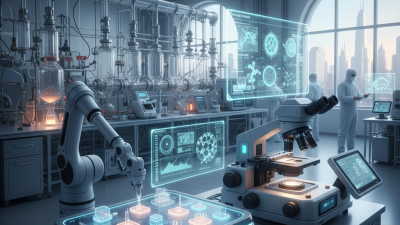
The landscape of scientific research is evolving rapidly, driven by innovations in scientific equipment. A recent report by ResearchAndMarkets highlights that the global scientific equipment market is projected to reach over $80 billion by 2025. This growth reflects the increasing demand for advanced tools to facilitate groundbreaking discoveries.
Dr. Emily Carter, a leading expert in biochemistry, emphasizes the critical role of scientific equipment. She states, “Innovative tools are essential for pushing the boundaries of our understanding.” This perspective underscores the importance of staying ahead in an increasingly competitive research environment.
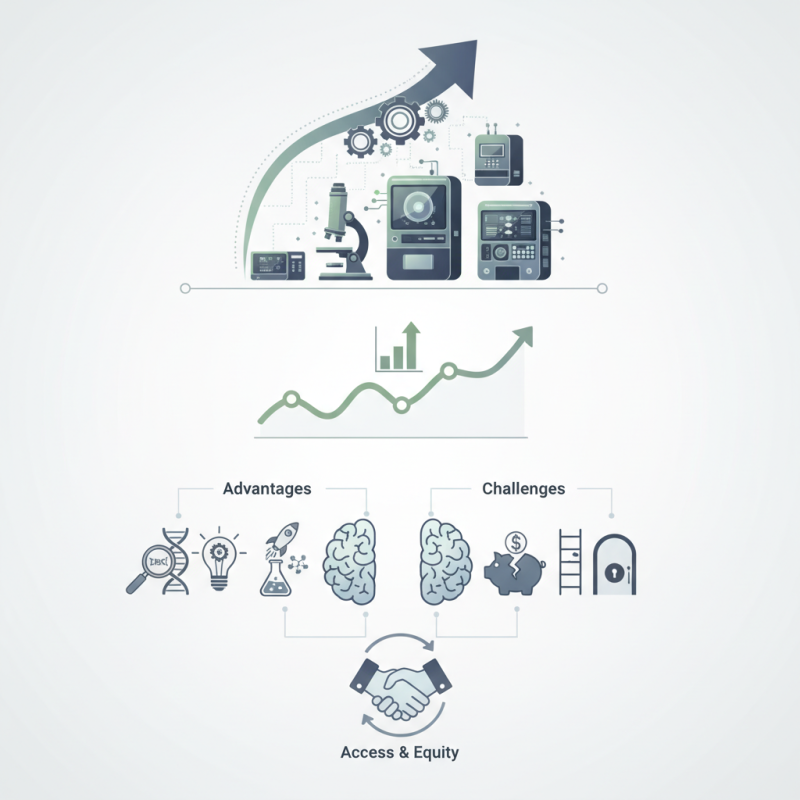
However, the reliance on advanced scientific equipment presents challenges. Not all laboratories can afford these innovations, leading to disparities in research capabilities. As the industry evolves, it is vital to consider both the advantages and limitations of new technologies. Researchers must continually strive for access and equity in scientific equipment, ensuring that they can all contribute to our collective knowledge.
Advancements in Laboratory Equipment: A New Era for Scientific Research
Advancements in laboratory equipment are reshaping scientific research. Innovative technologies enhance data accuracy and improve experimental efficiency. For instance, automated systems reduce human error while increasing throughput. Reports from the National Science Foundation indicate that laboratory automation can boost productivity by up to 50%. This transformation is crucial as researchers face tighter deadlines and greater demands for reproducibility.
Modern analytical instruments, such as high-resolution mass spectrometers, provide precise and reliable data. They enable scientists to analyze complex samples with unprecedented detail. A study from the American Chemical Society notes that these instruments have improved measurement accuracy by more than 30%. However, accessibility remains an issue. Many research facilities still lack the budgets to acquire cutting-edge technologies.
Moreover, while advancements promise enhanced capabilities, they also present challenges. Training personnel to operate sophisticated equipment takes time and resources. There’s also a gap in knowledge among researchers regarding the latest technologies. Ensuring that benefits reach all areas of research is vital. Bridging this gap will help maximize the potential of these innovations in the scientific community.
Top Scientific Equipment Innovations Transforming Research Today
| Equipment Type | Innovation Description | Impact on Research | Key Features |
|---|---|---|---|
| Automated Liquid Handlers | Machines that automate the process of transferring liquids to prevent contamination and ensure precision. | Increased throughput and reduced human error in experimental procedures. | High precision, programmable protocols, integration with lab software. |
| 3D Bioprinter | A device that prints tissues and organs for research and medical applications. | Enhanced capabilities for tissue engineering and regenerative medicine. | Customizable bio-inks, high-resolution printing, real-time monitoring. |
| Smart Microscopes | Microscopes integrated with AI to enhance image analysis and data processing. | Accelerated image analysis leading to quicker research conclusions. | AI-assisted imaging, cloud integration, remote access. |
| Advanced Sequencing Technologies | New methods for sequencing DNA and RNA with higher speed and accuracy. | Facilitated precision medicine and genomic research. | Rapid throughput, reduced cost per sample, manifold detection technologies. |
| Lab-on-a-Chip Devices | Miniaturized devices that perform multiple laboratory functions on a single chip. | Enabled faster diagnostics and reduced sample volumes. | Multi-functionality, portability, and cost-effective analysis. |
Revolutionizing Data Collection: Next-Generation Sensor Technologies
Next-generation sensor technologies are driving a major shift in data collection methodologies across various scientific disciplines. Advanced sensors now offer unprecedented accuracy and sensitivity, enabling researchers to gather more precise data in real-time. For instance, recent studies indicate that the accuracy of environmental sensors has improved by up to 40% in the past five years. This increase fosters enhanced monitoring of climate changes and allows for immediate responses to environmental shifts.
Moreover, miniaturization has been a significant trend in sensor technology. Current devices are often smaller and lighter, facilitating deployment in hard-to-reach areas. Studies show that using compact sensors can reduce costs by up to 30% while enhancing data collection efficiency. However, the integration of these technologies isn't without challenges. Researchers must carefully evaluate their calibration processes and the potential for data overload. As the volume of data increases, identifying key patterns becomes more complex.
While the advancements in sensor technologies are impressive, reliance on these tools raises concerns about data interpretation. A thought-provoking statistic emphasizes that nearly 45% of data collected may become irrelevant if not contextualized properly. Researchers are encouraged to balance innovation with critical analysis to avoid drawing misleading conclusions. This dynamic landscape of data collection is exciting, yet it requires thoughtful consideration of the associated risks.
Automation in Laboratories: Robotics and AI Improving Experimental Efficiency
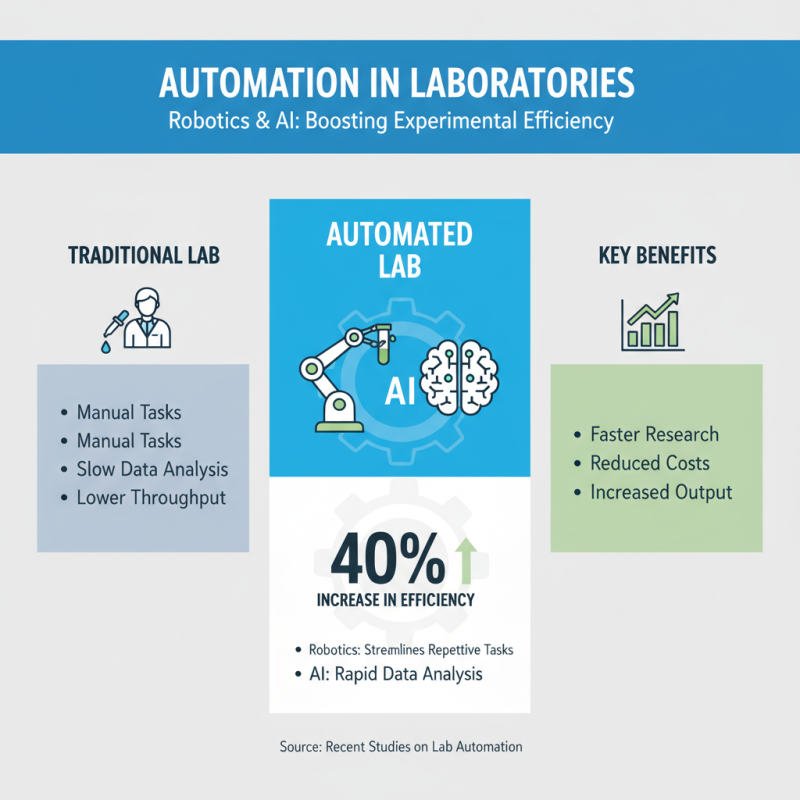
Automation continues to revolutionize laboratory environments, bringing transformative changes to research efficiency. Recent studies highlight that laboratories utilizing robotics and AI can boost experimental efficiency by up to 40%. This is significant in an era where researchers face immense pressure to increase output while managing costs. Robotics streamline repetitive tasks, while AI analyzes complex datasets swiftly.
Implementing AI tools can lead to a reduction in human error. Yet, reliance on automation raises questions about the potential loss of traditional skills. For example, a report from an industry think tank revealed that 65% of laboratory professionals feel less confident in basic manual techniques due to automation reliance. This highlights a need for balance in training and maintaining hands-on skills alongside adopting new technologies.
The integration of automation is not without challenges. Costs of implementing advanced robotic systems can be substantial. Additionally, there are issues concerning data security and protocol adherence. Initial investments may deter smaller labs. Continuous evaluation of these technologies is essential to ensure they enhance, rather than hinder, the research process. Striking a balance will be critical as the landscape of scientific research evolves.
Ultra-Modern Imaging Techniques: Transforming Biological and Material Science
Ultra-modern imaging techniques are revolutionizing both biological and material sciences. Advanced modalities such as cryo-electron microscopy and super-resolution microscopy allow researchers to explore cellular structures and materials at unprecedented resolutions. According to a recent report from the National Institutes of Health (NIH), these techniques are now capable of visualizing samples at resolutions as fine as 1 nanometer, a feat not achievable with traditional methods.
Studies indicate that over 70% of molecular biology advancements are linked to improvements in imaging technologies. These approaches have uncovered new protein structures, significantly enhancing our understanding of disease mechanisms. Moreover, they facilitate real-time imaging, enabling scientists to observe dynamics within living cells. While these innovations yield impressive results, challenges remain. High costs and complex data analysis often limit accessibility for smaller laboratories.
Furthermore, the integration of artificial intelligence with imaging techniques poses both opportunities and challenges. AI can expedite the analysis of large datasets, yet it raises concerns about the accuracy of interpretations. Researchers must remain vigilant to ensure that findings are robust and reproducible. These considerations are crucial as the boundaries of science continue to expand through technology.
Portable Field Equipment: Enhancing Research Accessibility and Collaboration
Portable field equipment is revolutionizing research by making it more accessible. Researchers can now conduct experiments in remote locations. This flexibility encourages collaboration across disciplines. With compact tools, scientists can gather data in real-time. They are not confined to labs anymore. This increases the efficiency of their work.
The latest innovations in portable equipment offer enhanced features. Many gadgets are lightweight and user-friendly. They are designed to withstand tough environmental conditions. However, researchers must remember that these tools have limitations. Calibration and maintenance require attention. Not all data collected will be perfect. There is a learning curve, and adapting to new technologies takes time.
Collaboration becomes easier with mobile tools. Teams can share findings instantly, regardless of location. This creates opportunities for interdisciplinary studies. Yet, researchers should remain cautious. Relying too much on technology might overlook critical details in data interpretation. Striking a balance between innovation and traditional methods is essential for success.
Related Posts
-
2026 Top Scientific Lab Equipment Innovations for Research and Development?
-
2026 Top Scientific Lab Equipment Innovations to Watch?
-
Top 10 Best Science Laboratory Equipment You Need for Your Experiments?
-
What is a Microbiology Lab and What Do They Do?
-
How to Choose the Best Lab Supply Store for Your Needs?
-
Best Medical Laboratory Equipment for Accurate Testing?
Schedule
Monday to Thursday:
8:15 – 17:00
Friday:
8:00-15:00
Address
Leonardo Da Vinci, 10
Valencia Technology Park
46980 Paterna, Valencia, SPAIN
Real Laboratory SL
info@site_e1c8a3bd-d539-4d7f-8695-37f21373de39
Teléfono: +34 96 136 61 07