

• NEWS AND UPDATES

    The latest updates regarding our products and our company

How to Choose the Right Medical Syringe?

Choosing the right Medical Syringe is a practical decision, not a simple shopping task. The correct choice depends on the intended procedure, fluid volume, delivery route, and required precision. A 1 mL syringe may support accurate measurement for small volumes, while a 20 mL model may suit larger transfers. Every detail matters.

Tip design also deserves careful attention. Luer-lock connections reduce accidental separation during professional use. Slip-tip designs may serve different applications, depending on equipment compatibility. Needle gauge and length must match the procedure, tissue depth, and clinician’s instructions. A narrow needle can reduce discomfort, but it may slow the movement of thicker fluids. That trade-off is easy to overlook.

Safety begins with reliable sourcing. Select sterile, single-use products from established manufacturers with clear labeling and intact packaging. Check the expiration date, volume markings, material, and compatibility with the medication or fluid. Never assume that two syringes with similar shapes perform identically. A small scale-marking error can affect measurement accuracy. It sounds minor. It is not.

This guide explains how healthcare professionals and informed buyers can compare syringe types with greater confidence. It considers practical handling, product quality, storage conditions, and manufacturer documentation. Clinical judgment remains essential, because general information cannot replace professional training. Even experienced users should pause when a syringe feels unfamiliar or the packaging seems damaged. Careful selection is not excessive caution; it is part of dependable medical practice.
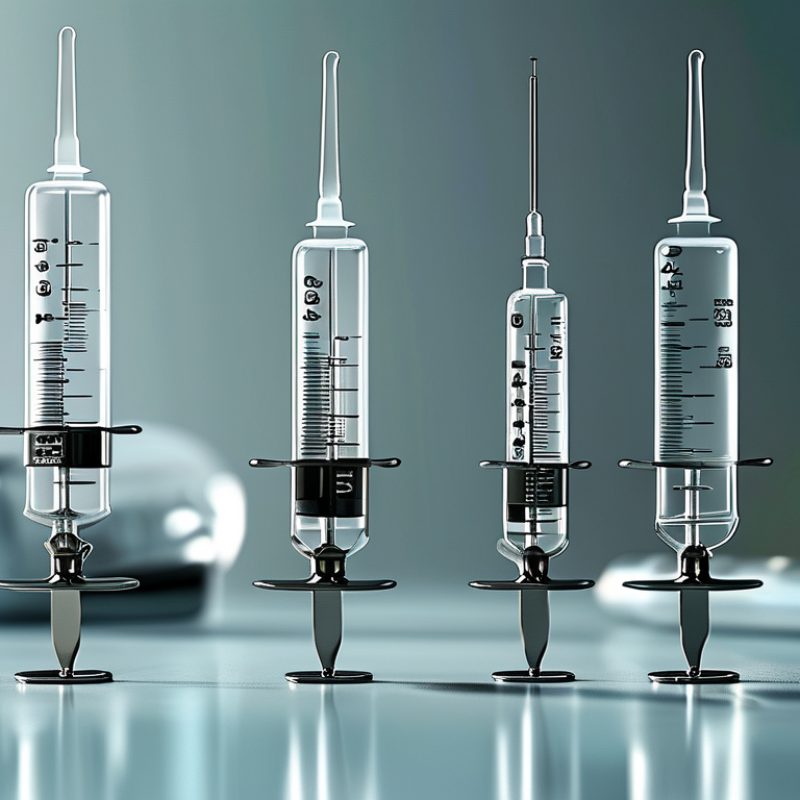
How to Choose the Right Medical Syringe?

Identify the Intended Medical Use and Syringe Type

How to Choose the Right Medical Syringe?

Identify the Intended Medical Use and Syringe Type

Choosing a medical syringe starts with its intended use, not its appearance or price. A syringe for medication delivery may differ greatly from one used for laboratory sampling. Oral syringes are designed for liquids taken by mouth. Enteral syringes support feeding-tube applications. Insulin and tuberculin syringes provide smaller volumes and finer measurement markings.

Needle selection also depends on the procedure. Some syringes are needleless and connect to compatible devices. Others use detachable needles with different connection systems. A luer-lock connection can provide a more secure fit than a slip-tip design. However, compatibility must be checked before use. A secure connection is not enough if the syringe size is unsuitable.

Volume and graduation are equally important. Select the smallest practical capacity for clearer measurement. A 1 mL syringe may offer better control for small doses than a 10 mL syringe. Read the markings at eye level. Small errors can matter. I have seen people choose a syringe by capacity alone, then struggle with awkward markings or poor handling. That choice deserves a second look.

Sterility, packaging condition, and single-use instructions require attention. Never use a damaged, opened, or unclear package. Healthcare professionals should follow the medication label, facility procedures, and applicable medical guidance. When the intended route or syringe type is uncertain, ask a qualified clinician or pharmacist before use. Safety depends on the full setup, not one component.

Select the Correct Syringe Capacity and Measurement Accuracy

How to Choose the Right Medical Syringe?

Select the Correct Syringe Capacity and Measurement Accuracy

Choosing a syringe starts with the volume you need to measure, not its appearance. In practice, a smaller syringe often provides clearer markings for small quantities. A 1 mL syringe may show finer divisions than a 10 mL syringe. Larger capacities suit larger volumes, but they can make small measurements harder to read. Always follow the instructions from a qualified healthcare professional.

Measurement accuracy depends on the graduation scale, plunger position, and your reading angle. Hold the syringe at eye level and check the edge of the plunger against the correct marking. Remove visible air bubbles when the procedure requires it. Confirm that the printed unit is correct, such as millilitres or another approved unit. Small errors matter. I have seen careful users rush this step, especially under pressure.

Tips: Choose the smallest suitable capacity. Read the markings twice. Keep the syringe upright during measurement. Check the seal and barrel for damage before use. If the markings seem crowded, stop and ask a trained professional. That pause is worthwhile. Also, do not assume every syringe has the same graduation pattern. Some scales are difficult to interpret, and my first choice would not always be the best choice after closer inspection. Accuracy comes from matching capacity, scale clarity, and the intended clinical task.

Match the Syringe Tip and Connection to the Required Equipment

How to Choose the Right Medical Syringe?

Match the Syringe Tip and Connection to the Required Equipment

Choosing a syringe starts with the equipment it must connect to. The tip is not a minor detail. A Luer lock tip twists onto compatible fittings and offers a firmer connection during controlled delivery. A slip tip pushes onto suitable fittings without threading, but it may loosen if handled poorly. Catheter-tip syringes suit larger tubing and feeding connections. They are not interchangeable with every medical device.

Check the connection before opening the sterile package. Compare the syringe tip with the port, tubing, or needle hub. Look for a secure fit, smooth movement, and no visible gaps. The required volume also matters. A smaller syringe can improve control, while a larger barrel may reduce the number of transfers. Dead space can affect measured accuracy, especially with small volumes. I have found that rushed selection causes more problems than unfamiliar equipment. The fitting may look correct and still fail under pressure.

Tips: Confirm the connection type in the equipment instructions. Never force a mismatched tip. Keep the syringe and connected components sterile. If the fit feels loose, stop and reassess. It is easy to overlook small differences between similar-looking fittings, so a second check is worthwhile.

How to Choose the Right Medical Syringe? - Match the Syringe Tip and Connection to the Required Equipment

Required Equipment or Application Recommended Syringe Tip or Connection Common Syringe Sizes Typical Compatible Equipment Key Selection Considerations
Hypodermic needle with a standard needle hub Luer-lock tip 1 mL to 60 mL Needles with a standard Luer connection, needle-free access devices, and some medication-transfer accessories The threaded connection helps secure the needle and reduces the risk of accidental separation during use. Select a syringe size that provides adequate volume without unnecessarily reducing dosing accuracy.
Hypodermic needle requiring rapid attachment or removal Luer-slip tip 1 mL to 20 mL Compatible needles and accessories designed for a slip-fit Luer connection The tip is pushed onto the matching hub rather than screwed on. Confirm that the connection is secure and that the equipment specifically permits Luer-slip use.
Needle-free IV access device Luer-lock tip 1 mL to 60 mL Needle-free connectors, extension sets, stopcocks, and IV administration accessories with a standard Luer interface Check the connector instructions, required priming volume, and fluid pathway. Use only the connection type specified for the access device.
Insulin administration with a fixed insulin needle Fixed needle 0.3 mL, 0.5 mL, or 1 mL Insulin vials intended for the corresponding concentration and syringe scale Use the correct concentration marking, such as U-100, and never convert markings between concentrations without professional direction. A fixed needle reduces connection steps and dead space.
Very small-volume medication measurement Luer-lock or Luer-slip 0.3 mL, 0.5 mL, or 1 mL Small-volume needles, laboratory transfer accessories, and compatible medication devices A smaller barrel generally makes fine graduations easier to read. Confirm the graduation interval and avoid using a syringe beyond its marked capacity.
Tuberculin-style intradermal or small-dose measurement Luer-lock, Luer-slip, or fixed needle 1 mL Fine-gauge needles or other accessories with the matching connection Choose the tip according to the needle or accessory being used. Verify that the barrel graduations support the required dose and that the needle is suitable for the intended route.
Catheter or irrigation procedure Catheter tip 20 mL to 60 mL Urinary catheters, wound-irrigation devices, and other large-opening accessories designed for a catheter-tip syringe The tapered tip is designed for larger openings and is not a substitute for a standard Luer connection. Check the tip diameter and the equipment instructions before use.
Enteral feeding tube or enteral medication port Dedicated enteral connector 5 mL to 60 mL Enteral feeding tubes and enteral extension sets using a dedicated enteral interface Do not use a Luer syringe for an enteral connection. Use a syringe specifically designed for the tube system to reduce the risk of misconnections.
Blunt cannula or medication-transfer accessory Luer-lock tip 3 mL to 60 mL Blunt filling needles, transfer devices, vial adapters, and other accessories with a compatible threaded Luer hub A Luer-lock connection is generally preferred when the accessory may encounter resistance. Confirm that the cannula or adapter is intended for the medication and procedure.
Large-volume fluid transfer without a needle Catheter tip or Luer-lock tip 20 mL to 60 mL Large-bore tubing, irrigation equipment, transfer sets, or other accessories specified for the selected tip Use a catheter tip for large-bore or tapered openings and a Luer-lock tip for threaded Luer accessories. Consider flow requirements, viscosity, and the equipment’s maximum pressure limits.
Blood-gas or specialized sampling equipment Connection specified by the sampling device Typically 1 mL to 3 mL Blood-gas collection syringes, sampling kits, and analyzers with a designated interface Use the syringe supplied or specified for the sampling system when required. Confirm anticoagulant requirements, sample volume, air exclusion, and compatibility with the analyzer.
General selection rule: Match the syringe tip to the equipment connection first, then select the smallest suitable barrel size for the required volume. Always follow the device instructions, confirm route-specific requirements, and use sterile, single-use components when required.

Choose Appropriate Materials, Sterility, and Safety Features

Medical syringe selection starts with the material that touches the medication and patient. Medical-grade polypropylene offers strength, clarity, and broad chemical compatibility. Some medications may interact with plastic surfaces. Check documented compatibility data, not assumptions. Rubber components also need review. Certain formulations can absorb into, or react with, elastomeric parts. A trained pharmacist or clinician should confirm suitability for specialized medications.

Sterility is not simply a clear package. Look for intact, sealed packaging and a stated sterilization method. Do not use a syringe if the wrapper is wet, torn, or previously opened. Single-use devices should remain single use. That sounds obvious. Busy clinical settings can make obvious rules harder to follow. Select a size that allows accurate measurement without forcing the plunger. Small-volume syringes often support finer dose control. Inspect the graduation marks under normal working light.

Safety features should match the actual procedure. A needle-shielding or needle-retraction design may reduce accidental exposure after use. It does not replace careful handling or an approved sharps container. Choose secure connections to prevent leakage during injection. Luer-lock fittings can provide added connection security, but staff still need to check the fit. My practical preference is simple: test the workflow before routine use. A feature that slows a trained user or causes confusion may create new risks. Specifications are important, yet real handling deserves equal attention.

Verify Compatibility, Handling Requirements, and Disposal Procedures

Choosing the right medical syringe starts with compatibility, not convenience. Check the prescribed medication, concentration, and required volume before opening the package. Confirm that the syringe material suits the medication, especially if the solution is oily, light-sensitive, or chemically reactive. The connection must also match the needle or administration device. A loose fit can cause leakage. A forced connection may damage the equipment. When uncertain, ask a qualified healthcare professional or pharmacist.

Handling requirements deserve equal attention. Inspect the sterile package for tears, moisture, or an expired date. Wash and dry your hands before preparing the syringe. Keep the tip capped until use, and avoid touching sterile surfaces. Use clear lighting to check the liquid for particles, unusual color, or cloudiness. Never reuse a disposable syringe. I have seen rushed preparation create avoidable errors, so a quiet, clean workspace matters more than speed.

Tips: Read the instructions twice. Match the syringe scale to the required dose. Keep medication and equipment clearly identified. After use, place the syringe immediately into an approved, puncture-resistant sharps container. Do not recap, bend, break, or manually remove the needle. Keep the container upright and away from children and animals. Follow local healthcare disposal guidance, because collection rules can differ between communities. If the container is nearly full, seal it according to its instructions and contact an authorized disposal service.

How to Choose the Right Medical Syringe?

Select the smallest syringe that safely accommodates the intended volume, because smaller barrels generally provide finer graduations. Always verify connector compatibility, medication and material requirements, and the product labeling before use.

Chart guide: The values show representative common syringe capacities and smallest graduations. Actual graduations vary by syringe design, so confirm the package specifications. For disposal, do not recap, bend, break, or remove needles by hand; place used sharps immediately into an approved puncture-resistant sharps container according to local regulations.