
NEWS AND UPDATES
The latest updates regarding our products and our company

Top 10 Essential Medical Lab Equipment Every Laboratory Needs?
In the world of medical laboratories, the right tools are essential. Medical lab equipment plays a crucial role in diagnostics and research. Proper equipment ensures accurate results and enhances patient care.
Every lab must consider its specific needs. Essential items include centrifuges, microscopes, and autoclaves. Each piece of equipment has unique benefits, yet the challenge lies in maintaining and upgrading old devices.
Investing wisely in medical lab equipment can prevent costly mistakes. For instance, a faulty pipette can lead to errors. Laboratories must continually assess their tools and technologies. The choice of equipment should reflect the lab’s goals and capabilities. Balancing innovation with reliability can sometimes feel overwhelming. Nonetheless, the right equipment fosters a solid foundation for health advancements.

The Importance of Accurate Diagnostic Tools in Medical Laboratories
Accurate diagnostic tools are vital in medical laboratories. They play a crucial role in patient care and treatment decisions. Every lab must invest in reliable equipment to ensure precise results. Without this, diagnoses can lead to incorrect treatments, affecting patient outcomes.
For instance, blood analyzers provide essential data on various health parameters. If these devices are miscalibrated, they can deliver false readings. This can happen more often than one might think. Regular maintenance is crucial to minimize errors. Other tools, like microscopes, require skilled technicians for effective use. An untrained eye might overlook critical details.
The need for continued education in lab techniques is essential. As technology evolves, so do the standards. Laboratories must adapt to integrate new methods and tools. This not only ensures accuracy but builds trust in healthcare systems. Accurate lab results ultimately lead to better treatment pathways and improved patient health.
Top 10 Essential Medical Lab Equipment Every Laboratory Needs
| Equipment | Purpose | Key Features | Importance |
|---|---|---|---|
| Microscope | Cell and tissue analysis | High magnification, brightfield and fluorescence options | Essential for diagnosis and research |
| Centrifuge | Separation of fluids | Variable speeds, different rotor types | Critical for blood and urine tests |
| Pipettes | Liquid handling and sample preparation | Adjustable volume settings, ergonomic design | Accurate measurements are crucial |
| Spectrophotometer | Measurement of light absorption | Wide wavelength range, and digital display | Important for chemical analysis |
| Autoclave | Sterilization of lab equipment | High temperature and pressure settings | Essential for maintaining safety standards |
| Incubator | Growth of cultures | Temperature control, humidification | Important for microbiological studies |
| Refrigerator | Storage of samples and reagents | Temperature control, organization compartments | Maintains sample integrity |
| Electrophoresis Unit | Separation of DNA/RNA/proteins | Multiple gel formats, adjustable voltage | Crucial for genetic analysis |
| Blood Gas Analyzer | Assessment of blood gases and electrolytes | Rapid results, portable options | Vital for emergency care |
| Microtome | Sectioning of tissue samples | Precision cutting, adjustable thickness | Essential for histopathological analysis |

Essential Microscope Types and Their Applications in Clinical Diagnostics
Microscopes are vital in clinical diagnostics. They allow healthcare professionals to examine samples in detail. Different types of microscopes serve specific purposes. For example, light microscopes are commonly used for observing cells and tissues. According to the National Institutes of Health, up to 80% of diagnoses are made with the help of microscope examinations.
In addition, electron microscopes provide higher resolution. They are essential for visualization at the molecular level. These microscopes can detail cellular structures that light microscopes cannot. A 2020 report from the World Health Organization highlighted a significant increase in the use of electron microscopy for viral studies. However, electron microscopes are expensive and require specialized training.
Some labs may overlook the importance of maintaining microscopes. Regular calibration is key for accurate results. Improper maintenance can lead to flawed data. Labs should prioritize training staff to use these tools effectively. Continuous education is crucial for optimal results in diagnostics.
Analyzing the Role of Centrifuges in Sample Separation and Preparation
Centrifuges are essential tools in any medical laboratory. They play a critical role in sample separation and preparation. The principle is simple: spinning samples at high speed causes denser components to settle at the bottom. According to industry reports, centrifuges improve separation efficiency by over 90% in various applications. This process is vital for diagnostics, research, and blood component preparation.
When using centrifuges, proper technique is crucial. Ensure samples are balanced within the rotor. An unbalanced load can lead to equipment damage or inaccurate results. Additionally, monitoring speed and time is important for optimal separation. Miscalculations can result in an incomplete separation, affecting test outcomes. Familiarize yourself with different rotor types and their specific applications to enhance laboratory performance.
Tips: Regular maintenance is key to prolonging a centrifuge's lifespan. Inspect seals and rotors frequently to prevent leaks. Keep an eye out for wear and tear, which can compromise separation capabilities. Also, document every use and maintenance event. This practice ensures accountability and quality control within the lab, ultimately leading to more reliable results.
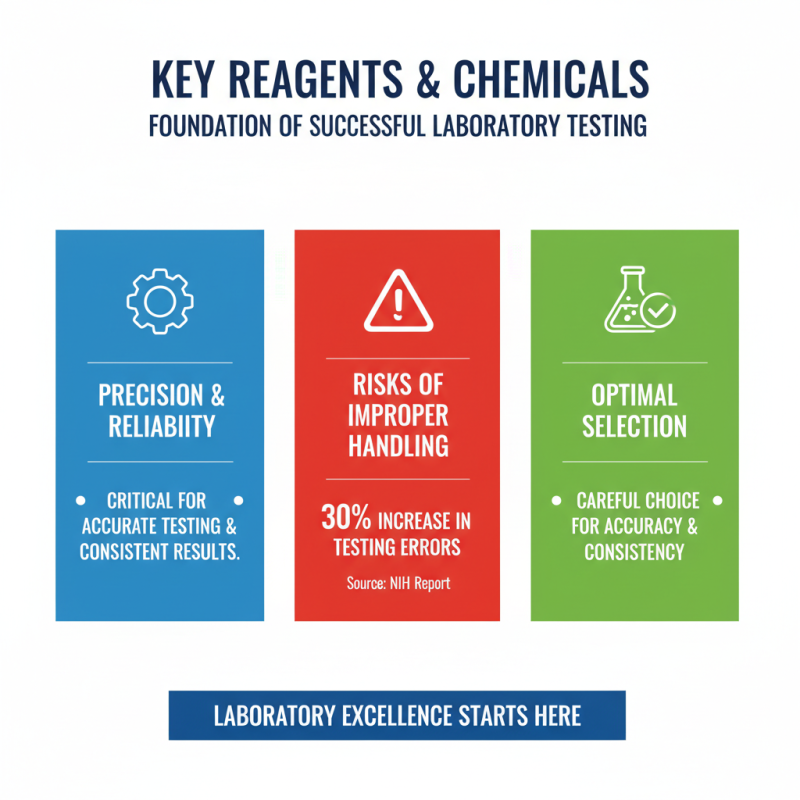
Key Reagents and Chemicals: Foundation of Successful Laboratory Testing
Laboratories thrive on precise testing and reliable results. Key reagents and chemicals form the foundation of successful laboratory operations. According to a report by the National Institutes of Health, improper handling of chemicals can lead to a 30% increase in testing errors. Each reagent must be carefully selected for accuracy and consistency in the testing process.
Investing in high-quality reagents is crucial. Regularly assess the expiration dates and storage conditions of chemicals. Maintain an organized inventory to ensure easy access and reduce waste. Remember, even minor contaminants can skew results. Furthermore, training staff on proper handling can mitigate risks.
When considering chemicals, you might overlook the importance of maintenance. Poorly calibrated equipment can lead to incorrect conclusions. It's essential to adapt protocols based on the types of reagents used. Encourage periodic reviews of current practices to identify areas of improvement. Small adjustments can lead to significant advances in test reliability.
Innovative Lab Technologies: Enhancing Efficiency and Accuracy in Diagnostics
Innovative lab technologies are crucial for improving efficiency and accuracy in diagnostics. Laboratories today rely on advanced equipment to deliver reliable results. High-throughput analyzers and automated pipetting systems can significantly reduce manual errors. Such innovations allow technicians to focus on complex analyses, enhancing overall productivity.
Tips: Regular training on new technologies is essential. Staff should feel confident using innovative tools. Simple workshops can improve skills and familiarity. Constant feedback helps identify challenges and optimize workflows.
Many laboratories are under pressure to keep up with rapid advancements. Some may hesitate to adopt new technologies due to budget constraints. However, investing in updated equipment can lead to long-term cost savings. Better accuracy means fewer repeat tests and greater patient satisfaction. Embracing change can be daunting, but the potential benefits outweigh the challenges.
Top 10 Essential Medical Lab Equipment
This bar chart illustrates the essential medical lab equipment every laboratory needs based on their significance in enhancing efficiency and accuracy in diagnostics.
Related Posts
-
2026 Best Lab Apparatus for Innovative Experiments and Research?
-
How to Choose the Best Medical Lab Equipment for Your Facility
-
Top Biology Equipment for Effective Scientific Research and Experiments?
-

Best Medical Laboratory Equipment for Accurate Testing?
-
10 Essential Tips for Choosing the Best Medical Lab Supplies
-

2026 Top Lab Equipment Distributor Trends and Innovations?
Schedule
Monday to Thursday:
8:15 – 17:00
Friday:
8:00-15:00
Address
Leonardo Da Vinci, 10
Valencia Technology Park
46980 Paterna, Valencia, SPAIN
Real Laboratory SL
info@site_e1c8a3bd-d539-4d7f-8695-37f21373de39
Teléfono: +34 96 136 61 07