

• NEWS AND UPDATES

    The latest updates regarding our products and our company

China Best Tea Polyphenol Extract Supplier Guide

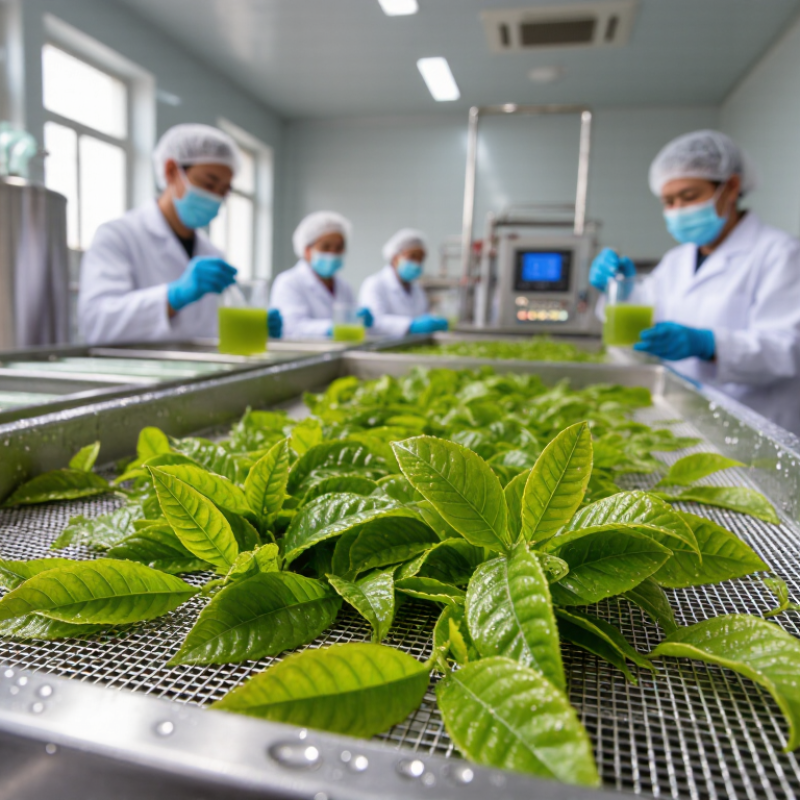
China Best Tea Polyphenol Extract Supplier Guide helps buyers evaluate suppliers with practical evidence, not polished claims alone. Tea Polyphenol Extract is commonly produced from green tea leaves, using controlled water or food-grade solvent processes. Its quality depends on leaf origin, harvest conditions, extraction temperature, filtration, drying, and storage. A reliable supplier should explain these stages clearly.

Look for documented manufacturing experience, suitable certifications, and traceable batch records. Ask for a current specification sheet and certificate of analysis. The report should identify total polyphenols, catechins, moisture, ash, residual solvents, heavy metals, pesticide residues, and microbiological limits. Independent testing can strengthen confidence. It also helps to compare samples from different lots, because one attractive sample proves very little. Small details matter.

Check whether the factory operates under recognized food-safety and quality systems, such as GMP or ISO-based procedures. Confirm packaging materials, shelf-life data, production capacity, and export experience for your target market. Transparent suppliers usually answer technical questions without avoiding difficult points. They should also discuss storage conditions, including light, heat, humidity, and oxygen exposure.

No supplier is perfect.

A careful buyer should still verify every document and test critical batches. Some specifications may look impressive but lack clear testing methods or laboratory information. That weakness deserves attention. This guide focuses on practical comparison, responsible sourcing, and communication that supports long-term quality. The best choice is not always the lowest-priced factory. It is the supplier that can repeatedly deliver a consistent Tea Polyphenol Extract with credible evidence, stable service, and room for honest review.
China Best Tea Polyphenol Extract Supplier Guide

Tea Polyphenol Extract Basics: Catechins, EGCG, and ISO 14502-1

Tea polyphenol extract comes from Camellia sinensis leaves. Its main catechins include EGCG, EGC, ECG, and EC. These compounds naturally occur in different proportions.

EGCG is often the most discussed catechin in green tea extracts. However, a higher EGCG percentage does not automatically mean better quality. Oxidation, harvest season, leaf grade, and extraction conditions can change the profile. Processing records matter. A reliable supplier should provide the botanical name, extraction method, solvent information, batch number, and storage conditions.

ISO 14502-1 is important for measuring total polyphenols in tea. It uses a Folin-Ciocalteu colorimetric method. This test supports comparison between batches, but it does not specifically measure EGCG. Catechin identification and quantification generally require a suitable chromatographic method, such as HPLC. Confusing total polyphenols with total catechins is a common sourcing mistake.

Look for a complete certificate of analysis. It should show test methods, results, limits, moisture, microbial status, and contaminant controls. Traceability is equally practical. A clear sample-to-batch link can reveal problems before production begins. In real purchasing work, specifications are sometimes too ambitious. They may ignore natural variation. Good quality control leaves room for evidence, not assumptions.

China Supplier Qualification: GMP, ISO 9001, and HPLC Testing

Choosing a China tea polyphenol extract supplier requires more than comparing prices. A qualified facility should operate under documented GMP procedures, with controlled hygiene, production, storage, and traceability systems. During supplier reviews, I check whether batch records match actual processing steps. Small details matter, such as sealed sample bags and calibrated weighing equipment.

ISO 9001 can show that a supplier manages quality through defined procedures and corrective actions. However, certification alone is not enough. Ask for the certificate scope, issue date, audit status, and manufacturing site address. Request recent batch records and a clear explanation of how deviations are handled. Paperwork can look perfect. It is not proof.

HPLC testing should confirm the catechin or total polyphenol profile stated in the specification. A reliable report includes the method, test date, sample number, chromatogram, and analyst approval. The laboratory should explain its reference standards and detection limits. Compare the report with an independently tested retained sample when possible. Results may vary slightly between laboratories, so acceptance limits must be agreed in advance. No supplier is flawless. What matters is honest disclosure, repeatable testing, and evidence that problems are investigated rather than hidden.

Compare 30–95% Polyphenol Grades Using HPLC and COA Data

China Best Tea Polyphenol Extract Supplier Guide

Tea polyphenol extracts may range from 30% to 95% purity. The percentage alone does not prove better performance. Ask suppliers for recent HPLC results and a matching Certificate of Analysis (COA). HPLC should identify major catechins, total polyphenols, and the testing method. Check whether results use a dry basis or as-is basis. This difference can change the apparent grade.

A reliable COA should show batch number, production date, sample date, and laboratory details. Review moisture, residual solvents, heavy metals, microbial limits, and pesticide screening. Compare the HPLC chromatogram with the reported percentage, not only the printed table.

A 95% grade may suit concentrated formulations, while a 30% grade can offer easier handling and lower cost. However, high purity may reduce natural supporting compounds. Real application trials still matter.

Tips:

Request two or three batch records, not one perfect sample. Confirm that the sample seal matches the COA batch. Ask how the supplier controls oxidation during drying and storage. Green color can look attractive, but it does not confirm polyphenol strength. Some documents may be incomplete. That deserves a clear question, not an assumption. Experienced buyers should also record their own test results, because laboratory variation and extraction differences can affect comparisons.

Safety Verification: Heavy Metals, Pesticides, Microbes, and EU Limits

China Best Tea Polyphenol Extract Supplier Guide

A reliable supplier should provide batch-specific safety evidence, not a recycled certificate. Ask for a recent Certificate of Analysis from an ISO/IEC 17025-accredited laboratory. Check the lot number, sampling date, test methods, and product identity. The report should match the actual tea polyphenol extract shipment. Small details matter.

Heavy metals require clear limits for lead, cadmium, mercury, and arsenic. Testing should reflect the intended food or supplement category. Pesticide screening should cover relevant multi-residue panels, including compounds commonly used in tea cultivation. A single “pass” statement is weak evidence. Request the full result.

Microbial controls should include total plate count, yeast and mold, Escherichia coli, and Salmonella where applicable. Moisture, water activity, and sealed packaging also affect stability during transport. For EU sales, compare results with current EU requirements and the limits for the specific product category. Limits may differ. Do not rely on a generic EU compliance claim.

Traceability should connect farm records, extraction dates, storage conditions, and shipment documents. In practical reviews, missing chain-of-custody information often creates more doubt than one delayed test. No checklist is perfect. Suppliers can make honest mistakes, and buyers can overlook unclear sampling. Independent retesting is sensible for new sources or changed batches. Safety verification should remain a routine process, not a one-time promise.

China Best Tea Polyphenol Extract Supplier Guide – Safety Verification

EU reference thresholds for selected contaminants in food supplements and plant-derived materials. Values are shown in mg/kg and should be confirmed against the finished-product category, tea matrix, and applicable EU legislation.

How to read this chart: The lead, cadmium, and mercury values are maximum levels applicable to food supplements under Commission Regulation (EU) 2023/915. The 0.01 mg/kg pesticide value is the EU default maximum residue level where no specific pesticide/commodity MRL applies under Regulation (EC) No 396/2005. Microbial acceptance criteria are not represented by one universal EU limit; they depend on the product category and should be defined using an applicable pharmacopoeial or validated specification, with testing for total aerobic microorganisms, yeasts and moulds, and specified pathogens.

References: Commission Regulation (EU) 2023/915 on maximum levels for certain contaminants in food; Regulation (EC) No 396/2005 on pesticide maximum residue levels; European Pharmacopoeia Chapter 5.1.8 for microbiological quality of herbal medicinal products.

Export Selection: MOQ, Lead Time, Stability, and Full Traceability

China Best Tea Polyphenol Extract Supplier Guide

For export purchasing, MOQ should match your trial plan, not only the supplier’s production capacity. A practical supplier may offer a smaller pilot batch before full-scale production. Ask whether the same raw material source will be used later. Otherwise, test results may not represent the final shipment. Very low MOQ sounds attractive, but it can increase packaging costs and batch variation.

Lead time needs a written schedule. Confirm raw material preparation, extraction, testing, packaging, and export document timing. A reliable supplier should explain delays before they affect your launch date. Stability evidence matters too. Request storage conditions, retest periods, appearance records, and test methods. Polyphenol levels can change with heat, moisture, light, or unsuitable packaging. Sometimes, the data looks complete but lacks long-term evidence. That needs questioning.

Full traceability should connect the finished extract to its source tea leaves, batch number, processing date, and quality records. Ask for certificates of analysis, test reports, allergen statements, and contaminant controls suitable for your destination market. During evaluation, compare samples from separate batches, not one perfect sample. Keep communication records and approve specifications before ordering. A supplier can be technically capable yet weak in documentation. That is an overlooked risk. When reviewing options, leave room for correction; export plans rarely stay unchanged.

China Best Tea Polyphenol Extract Supplier Guide - Export Selection: MOQ, Lead Time, Stability, and Full Traceability

Extract Category Typical Assay / Marker Indicative MOQ Typical Lead Time Shelf Life & Stability Recommended Packaging Traceability & Export Documents
Standard Tea Polyphenols Extract Polyphenols typically 50–80%; assay method should be stated, such as UV-Vis or HPLC. 25–100 kg for a standard stock item; custom production may require 100 kg or more. 7–15 working days for stock; 20–35 working days for new production. Usually 24 months when sealed and stored in a cool, dry, light-protected place. Food-grade lined fiber drums or cartons; moisture barrier and tamper-evident sealing recommended. Batch number, production date, certificate of analysis, specification sheet, SDS, packing list, invoice, and certificate of origin where required.
High-Polyphenol Tea Extract Polyphenols typically 80–98%; moisture and ash limits should be defined in the purchase specification. 25–50 kg for evaluation or pilot orders; 100–300 kg for routine export orders. 15–25 working days, including production, testing, and export preparation. Commonly 24 months; retain samples and accelerated-stability data should support the stated shelf life. Double polyethylene bags inside sealed fiber drums; nitrogen flushing may be considered for oxidation-sensitive material. Raw-material lot, extraction lot, blending record, in-process controls, final COA, and documented recall procedure.
EGCG-Enriched Tea Extract EGCG commonly specified by HPLC; commercial grades may range from approximately 30–90% depending on purification level. 10–25 kg for specialty grades; 50–100 kg for repeat orders. 20–35 working days because of additional purification and chromatographic testing. Typically 18–24 months; protection from heat, humidity, oxygen, and strong light is important. Light-resistant inner bag with sealed outer drum; storage temperature and humidity limits should appear on the label. HPLC chromatogram or validated test report, allergen statement, residual-solvent declaration, heavy-metal report, and pesticide-screening report.
Instant Tea Polyphenol Powder Water-dispersible powder; polyphenol level commonly specified at 30–70%, with solubility and color requirements. 50–100 kg; spray-drying or agglomeration may require a larger minimum batch. 15–30 working days, depending on drying capacity and flavor or carrier requirements. Usually 18–24 months; hygroscopicity, water activity, and caking tendency should be evaluated. Moisture-barrier bags in fiber drums or multiwall paper sacks; desiccant may be used when appropriate. Carrier declaration, food-contact packaging statement, batch records, microbiological results, and water-activity data.
Decaffeinated Tea Polyphenol Extract Polyphenol assay commonly 50–80%; caffeine limit must be agreed and verified by a quantitative method. 25–50 kg for qualified stock; 100 kg or more for customized caffeine limits. 20–35 working days, including caffeine analysis and residual-solvent testing where applicable. Generally 18–24 months under sealed, cool, dry, and light-protected storage. Sealed double liners in fiber drums; packaging should prevent moisture uptake and odor transfer. Caffeine test report, processing declaration, residual-solvent report, pesticide and heavy-metal results, and full batch genealogy.
Organic-Program-Compatible Tea Extract Assay varies by specification; organic status depends on valid certification and compliant processing, not on the extract name alone. 50–100 kg; certified organic raw materials and dedicated production may increase the MOQ. 25–45 working days, including certification review and document verification. Usually 18–24 months, subject to the approved specification and stability evidence. Clean, sealed, food-grade packaging with lot identification and segregation controls. Current organic certificate, transaction certificate when applicable, raw-material records, supplier approval records, and contamination-control plan.
Selection note: MOQ, lead time, assay, shelf life, and documentation are indicative export benchmarks rather than universal guarantees. Confirm the final specification, analytical methods, destination-country requirements, storage conditions, and batch-specific test results before placing an order.